



What's Happening?
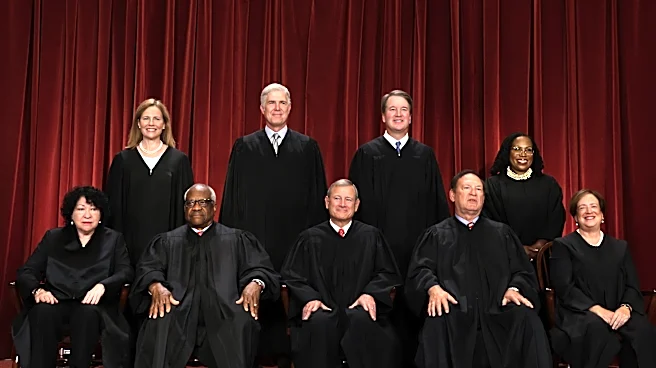
The U.S. Supreme Court has declined to review a Fifth Circuit ruling concerning the worldwide application of copyright termination. This decision follows the recusal of Justices Sonia Sotomayor, Neil Gorsuch, Amy Coney Barrett, and Ketanji Brown Jackson,
which resulted in the Court lacking a quorum to hear the case. Although the Court did not provide specific reasons for the recusals, reports indicate that these justices have book deals with Penguin Random House, a corporate affiliate of BMG Rights Management (US) LLC, one of the petitioners in the case. The Fifth Circuit's ruling in BMG Rights Management v. Vetter asserted that the statutory termination of a U.S. copyright applies globally, a stance that challenges long-held industry assumptions about the territorial limits of copyright termination. The ruling also states that if an author of a pre-1978 work dies before the original 28-year copyright term ends, the renewal term reverts to the author's heirs worldwide.
Why It's Important?
This development is significant for the U.S. music and publishing industries, as it leaves intact a Fifth Circuit ruling that could upend established practices regarding copyright ownership and territorial rights. The Fifth Circuit's decision, while only binding within its geographic boundaries (Texas, Louisiana, and Mississippi), introduces uncertainty for copyright holders and licensees operating internationally. The recusal of four Supreme Court justices due to potential conflicts of interest stemming from their book deals highlights ethical considerations within the judiciary, particularly concerning financial ties to entities involved in cases before the Court. This situation underscores the importance of judicial impartiality and the mechanisms in place to prevent conflicts of interest, even if it means a case cannot be heard by the highest court. The lack of a Supreme Court review means that the novel interpretation of copyright law by the Fifth Circuit will continue to influence legal proceedings and business strategies in the affected states, potentially setting a precedent for future challenges in other circuits.
What's Next?
With the Supreme Court declining to review the Fifth Circuit's ruling, the decision in BMG Rights Management v. Vetter remains in effect within the Fifth Circuit's jurisdiction. This means that copyright holders and legal professionals in Texas, Louisiana, and Mississippi must adhere to the interpretation that statutory termination of U.S. copyrights applies worldwide. Other circuits, which have previously held that termination applies only to rights within the United States, are not bound by this ruling, potentially leading to a fragmented legal landscape for copyright law across the country. The music and publishing industries will likely continue to monitor this situation closely, as the Fifth Circuit's novel interpretation could prompt further legal challenges or legislative efforts to clarify the territorial scope of copyright termination. The recusals of the justices may also reignite discussions about judicial ethics and transparency regarding financial interests and their potential impact on Supreme Court proceedings.
Beyond the Headlines
The recusals of multiple Supreme Court justices due to book deals with a publisher involved in a case raise broader questions about the financial activities of high-ranking judicial officials and their potential influence on judicial independence. While recusals are a standard procedure to avoid conflicts of interest, the frequency or nature of such instances can impact public perception of the judiciary's impartiality. This event also highlights the evolving complexities of copyright law in a globalized world, where digital distribution and international markets challenge traditional territorial understandings of intellectual property. The Fifth Circuit's ruling, even without Supreme Court endorsement, could encourage other courts to reconsider the global reach of U.S. copyright law, potentially leading to a more unified, or conversely, more chaotic, international copyright framework. The ethical implications for justices engaging in lucrative book deals with entities that may appear before the Court will likely remain a subject of public and legal scrutiny.