









What's Happening?
Governor Josh Green has announced the implementation of an Emergency Farmer Relief (EFR) grant program to assist farmers and ranchers in Hawaiʻi affected by recent natural disasters. The program, a collaborative effort between the Governor’s Office, the Department
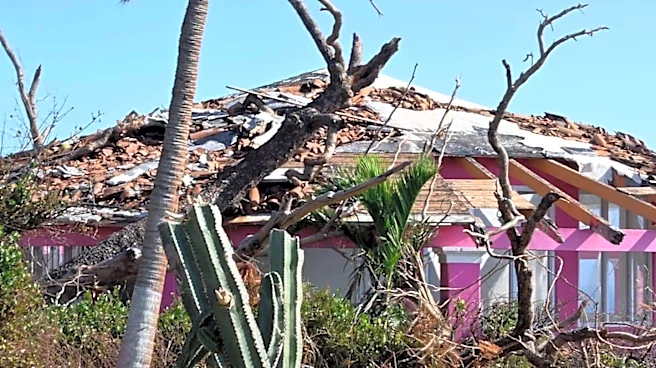
of Agriculture and Biosecurity (DAB), and the Department of Accounting and General Services (DAGS), aims to provide disaster support in response to three major storms: Lala, Lowell, and Moke. These storms severely impacted the state from mid-August through the first week of September 2026, causing significant damage to agricultural lands across Hawaiʻi. Starting November 2, 2026, eligible applicants from farms, orchards, ranches, and similar operations can receive up to $1,500 in relief funding. The online application portal will accept submissions until January 29, 2027. Sharon Hurd, chair of the Board of Agriculture and Biosecurity, emphasized the importance of these funds for the state's agricultural community.
Why It's Important?
This EFR program is crucial for the economic stability and food security of Hawaiʻi. The agricultural sector, vital for local sustenance, suffered extensive damage from the recent storms, including destroyed infrastructure and equipment. By providing direct financial relief, the program helps farmers and ranchers repair their operations, replace damaged assets, and resume food production. This support is essential for preventing long-term disruptions in the local food supply chain and mitigating the economic impact on agricultural communities. The initiative also underscores the state government's commitment to supporting its primary industries and ensuring the resilience of its economy in the face of increasing natural disasters. The quick disbursement of funds, as seen with previous relief efforts, is critical for immediate recovery.
What's Next?
The application portal for the Emergency Farmer Relief grants will open on November 2, 2026, and will remain open until January 29, 2027. Applicants will need to provide information to create an invoice and submit a W-9, Schedule C, or Schedule F from their tax returns as proof of their farming or ranching work. The DAB anticipates having EFR funding checks available for pickup starting in early to mid-January 2027, with applicants being informed of specific collection locations and times. The program has a limited amount of funds, and applications will be processed on a first-come, first-served basis if the number of eligible applicants exceeds available funds. Further information will be available on the DAB website.
Beyond the Headlines
The recurring need for emergency relief programs highlights the increasing vulnerability of agricultural sectors to climate-related events. This initiative could serve as a model for other regions facing similar challenges, emphasizing the importance of proactive disaster preparedness and rapid response mechanisms for agricultural resilience. Beyond immediate financial aid, the program implicitly encourages a broader discussion on sustainable farming practices and infrastructure improvements that can withstand future environmental impacts. The focus on local food production also reinforces the broader goal of enhancing regional food security and reducing reliance on external supply chains, a critical lesson learned from global disruptions.