



What's Happening?
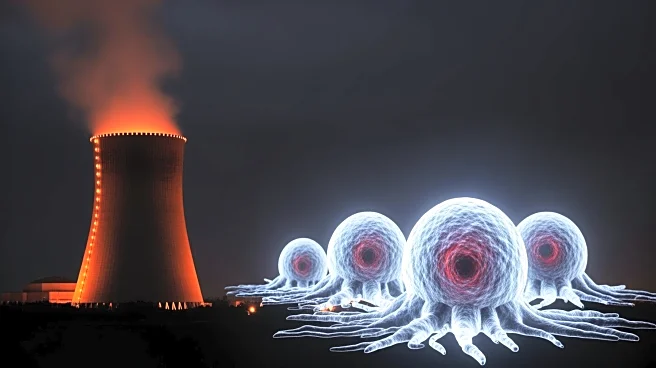
A national study published in Nature Communications has found that U.S. counties located within 200 km of nuclear power plants have higher cancer mortality rates compared to those further away. The research analyzed cancer mortality data from 2000 to 2018,
revealing that older adults, particularly those aged 65 to 74, are most affected. The study does not establish causation but highlights the need to explore potential exposure routes and long-term health impacts. The analysis used geographic proximity as a proxy for potential exposure, without measuring individual radiation exposure. The findings suggest a significant public health concern, as nuclear plants, while a low-carbon energy source, can release small amounts of radioactive pollutants.
Why It's Important?
The study underscores the potential public health implications of living near nuclear power plants, raising concerns about chronic low-level exposure to ionizing radiation, a known carcinogen. This research could influence public policy and regulatory measures regarding nuclear energy infrastructure and its environmental impact. Communities near these plants may face increased health risks, prompting calls for more comprehensive studies and possibly stricter safety regulations. The findings also highlight the need for improved risk assessment models that consider demographic and environmental factors, potentially affecting energy policy and public health strategies.
What's Next?
Future research is needed to incorporate direct radiation measurements and evaluate vulnerable populations, such as children. Studies should also explore site-specific cancers and other health outcomes like cardiovascular and neurological effects. Policymakers may need to reassess safety standards and consider additional protective measures for communities near nuclear facilities. Public health initiatives could focus on monitoring and mitigating potential risks associated with nuclear energy production.