



What's Happening?
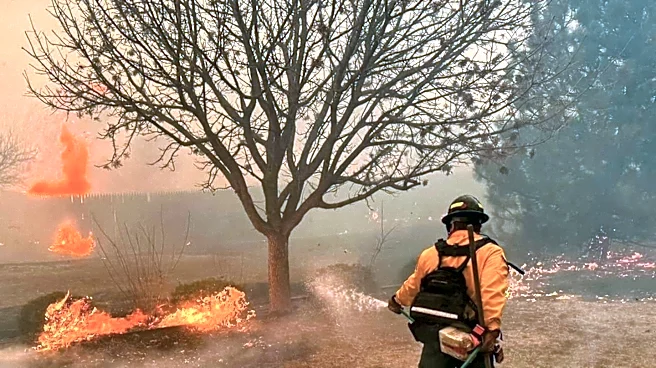
Wildfire evacuation orders in the U.S. are complex decisions made by fire officials, often leading to varied public reactions regarding their timing. These decisions are not solely based on the fire's location but on a comprehensive assessment of factors
aimed at protecting lives. Incident commanders gather real-time information on fire behavior, weather conditions, terrain, and road access, as well as the speed at which residents can safely evacuate. This data is shared among fire crews, law enforcement, and emergency managers to inform evacuation orders. Shannon Lewis, deputy fire chief for Truckee Meadows Fire, emphasized that wind is a significant factor, as it can rapidly accelerate fire spread, making a distant fire quickly become an immediate threat. To manage rapidly changing conditions, officials often establish 'trigger points'—predetermined locations that guide when warnings or orders should be issued, ensuring that communities have sufficient time to evacuate safely.
Why It's Important?
The nuanced approach to wildfire evacuation decisions is critical for public safety and effective disaster management in the U.S. The challenge lies in balancing the need for early warnings to ensure safe evacuation with avoiding unnecessary disruption and potential 'evacuation fatigue' among residents. Officials must consider the capacity of road networks, potential traffic congestion, and the sheer number of people needing to leave an area simultaneously. These factors directly impact the feasibility and safety of an evacuation. The varying public perception—some feeling orders are too late, others too early—underscores the difficulty of these decisions. Ultimately, the primary goal is life safety, ensuring that residents have ample time to exit a threatened area before conditions become life-threatening. This strategic decision-making process is vital for minimizing casualties and managing the logistical complexities inherent in large-scale evacuations during rapidly evolving wildfire events.
What's Next?
As wildfire risks continue to escalate across the U.S., fire officials will likely continue to refine their evacuation protocols, incorporating advanced predictive modeling and real-time data analysis. The establishment and communication of trigger points will become even more crucial for transparent and timely decision-making. There will be an ongoing need for public education campaigns to help residents understand the complexities of evacuation orders and the importance of early preparation. Furthermore, infrastructure improvements, such as enhancing road access and communication systems in high-risk areas, may be pursued to facilitate smoother evacuations. The feedback from residents, though sometimes critical, will also play a role in post-incident reviews, helping officials to learn and adapt their strategies for future wildfire events, aiming to strike a better balance between early warning and minimizing disruption while prioritizing life safety above all else.
Beyond the Headlines
The tension between public perception and official decision-making during wildfire evacuations highlights deeper societal challenges related to risk communication and trust in authorities. The 'too early' or 'too late' sentiment often stems from a lack of understanding of the dynamic and unpredictable nature of wildfires, particularly how factors like wind and terrain can rapidly alter a fire's trajectory. This situation also brings to light the psychological impact of evacuations, which can be highly stressful and disruptive, leading to a desire for clear, unambiguous directives. The long-term implications include the need for communities to develop a culture of preparedness, where residents are not only informed but also actively participate in pre-planning for potential evacuations. This involves understanding personal risk, having go-bags ready, and knowing multiple escape routes. Addressing these underlying issues of public understanding and preparedness is essential for fostering greater community resilience and ensuring more effective responses to future wildfire threats.