



What's Happening?
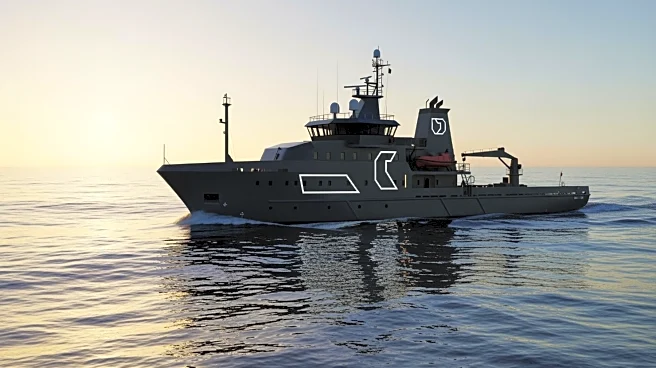
The Indian Coast Guard has commissioned its first indigenously designed and built pollution control vessel, 'Samudra Pratap', in Goa. The vessel, constructed by Goa Shipyard Limited, is a significant addition to the Coast Guard's fleet, enhancing its operational
reach and capability. The 114.5-meter ship, with over 60% indigenous content, is equipped with advanced systems for pollution response, fire-fighting, and maritime safety. Defence Minister Rajnath Singh highlighted the vessel's role in bolstering India's self-confidence and maritime safety. 'Samudra Pratap' is designed for pollution control but is also capable of search and rescue operations and coastal patrols. It represents a milestone in India's journey towards self-reliance in defense production.
Why It's Important?
The commissioning of 'Samudra Pratap' is a crucial step in strengthening India's maritime capabilities and self-reliance in defense production. The vessel enhances the Indian Coast Guard's ability to address oil spills, maritime emergencies, and security challenges, particularly in exclusive economic zones. This development aligns with India's broader maritime vision, emphasizing peace, stability, and environmental responsibility. The ship's advanced technology and indigenous design reflect India's growing capabilities in defense manufacturing, potentially reducing reliance on foreign technology and boosting the domestic defense industry. It also underscores India's commitment to safeguarding maritime interests and contributing to regional stability in the Indo-Pacific.
What's Next?
The 'Samudra Pratap' will be based at the Indian Coast Guard's Kochi base, where it will play a vital role in maritime safety and security operations. The vessel's commissioning is expected to inspire further advancements in India's defense manufacturing capabilities, with potential future projects focusing on enhancing the Coast Guard's operational doctrines and technological innovations. As India continues to assert itself as a responsible maritime power, the Coast Guard's practices and innovations may set benchmarks for global maritime governance. The focus will likely remain on strengthening cooperative frameworks and capacity-building initiatives to ensure peace and stability in the region.
Beyond the Headlines
The introduction of 'Samudra Pratap' highlights the ethical and environmental dimensions of maritime governance. As a pollution control vessel, it underscores the importance of protecting marine resources, which are considered a shared heritage of humanity. India's approach to maritime safety and environmental responsibility may influence international norms and practices, promoting a collective responsibility for marine resource protection. This development also reflects India's strategic positioning in the Indo-Pacific, where it aims to balance national interests with regional stability and cooperation.