





What's Happening?
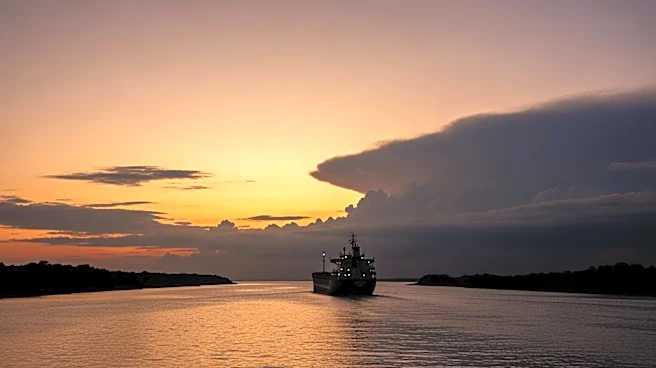
The United States is actively working to restore freedom of navigation in the Middle East, specifically focusing on the Strait of Hormuz. This strategic waterway has been closed for a month and a half, impacting global trade and the U.S.'s image in the region.
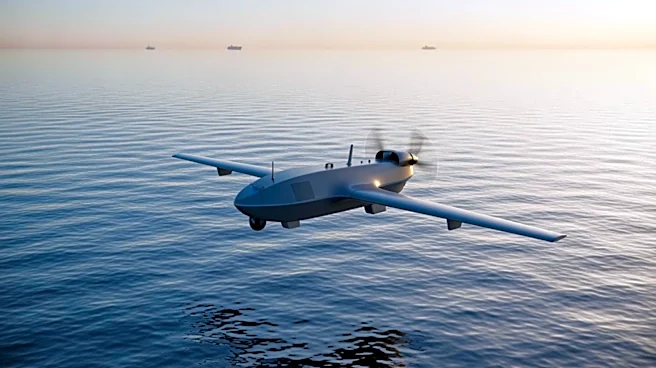
The U.S. Navy, under the command of U.S. Central Command (CENTCOM), has begun operations to clear mines from the strait, which were reportedly laid by Iran’s Islamic Revolutionary Guards Corps. Two U.S. Navy guided-missile destroyers, USS Frank E. Peterson and USS Michael Murphy, have already conducted operations in the Arabian Gulf as part of this mission. CENTCOM commander Adm. Brad Cooper stated that the U.S. is establishing a new safe passage for maritime traffic, which will be shared with the maritime industry to encourage the free flow of commerce. Additional U.S. forces, including underwater drones, are expected to join the clearance efforts soon.
Why It's Important?
The reopening of the Strait of Hormuz is crucial for the global economy, as it is a vital trade corridor that supports regional and global economic prosperity. The U.S. has historically been a champion of freedom of navigation, a role that has been challenged by the rise of other global powers such as China and regional actors like Iran. Successfully reopening the strait would reinforce the U.S.'s position as a global naval power and counter perceptions of weakening influence. Failure to do so could signal a shift towards a more multipolar world order, where U.S. dominance is increasingly contested. This development also highlights ongoing tensions in the region and the strategic importance of maintaining open sea lanes for international trade.
What's Next?
The U.S. plans to continue its mine-clearing operations in the Strait of Hormuz, with additional forces and technology being deployed to ensure the passage is safe for commercial shipping. The success of these efforts will likely influence U.S. relations with regional allies and adversaries, as well as its standing in global geopolitics. The international community, particularly countries reliant on oil shipments through the strait, will be closely monitoring the situation. The U.S. may also engage in diplomatic efforts to prevent future blockades and ensure the security of this critical maritime route.