
What's Happening?
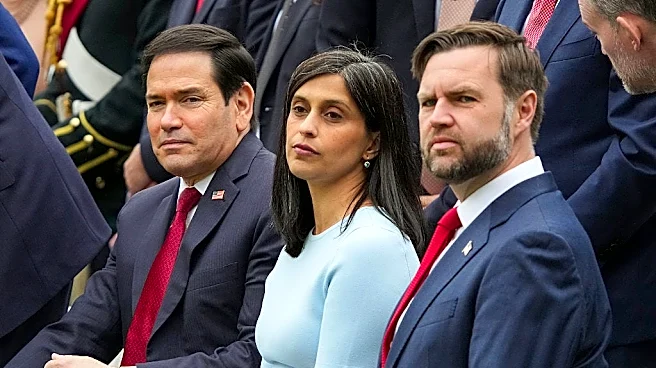
Speculation is growing regarding the 2028 Republican presidential primary, with potential contenders including Vice President JD Vance, Secretary of State Marco Rubio, Senator Ted Cruz, and Florida Governor
Ron DeSantis. Discussions on 'The Clay Travis and Buck Sexton Show' analyzed the fundraising capabilities, political coalitions, and donor support for these figures. The hosts also considered the significant influence President Trump's eventual endorsement could have on shaping the Republican nomination battle. The conversation suggests that a competitive, policy-focused primary could emerge among candidates who largely share conservative principles but offer different visions for the future of the America First movement. This comes after an analysis of an interview with Vice President JD Vance and a broader discussion about the Republican Party's future beyond the 2026 midterms. The show also touched upon Vance's comments regarding raising a young family while serving as vice president, drawing comparisons to historical examples of political families in the White House.
Why It's Important?
The early discussions surrounding the 2028 Republican presidential primary are important as they begin to frame the future leadership of one of the two major U.S. political parties. The potential candidacies of figures like JD Vance, Marco Rubio, Ted Cruz, and Ron DeSantis indicate a diverse field of conservative leaders vying for influence. The role of President Trump's endorsement highlights the continued impact of his political presence on the Republican Party's direction and internal dynamics. The emphasis on a 'policy-focused primary' suggests that while candidates may share core conservative principles, their differing visions for the 'America First movement' could lead to substantive debates on key issues. This early positioning and analysis of potential contenders will shape fundraising efforts, coalition building, and the overall political landscape for the next presidential election cycle, influencing policy discussions and voter engagement within the Republican base and beyond.
What's Next?
As the 2026 midterms conclude, the focus on the 2028 Republican presidential primary is expected to intensify. Potential candidates will likely begin to subtly or overtly position themselves, engaging in activities that build their public profiles, fundraising capabilities, and political networks. President Trump's future political actions and statements will be closely watched, as his endorsement is anticipated to be a critical factor in the nomination race. The discussions around policy differences among conservative candidates will likely evolve into more concrete platforms and proposals. Media outlets and political analysts will continue to monitor and report on the evolving dynamics, including fundraising reports, public appearances, and any early polling data. The South Carolina Senate runoff, also discussed in the source, indicates ongoing political activity that could influence the broader Republican landscape and the types of candidates who gain traction.
Beyond the Headlines
The early jockeying for the 2028 Republican presidential nomination reflects deeper trends within the party, particularly the ongoing evolution of the 'America First' movement. The discussion of candidates sharing 'similar conservative principles' but offering 'different visions' suggests an internal debate about the movement's future direction and priorities. This could lead to a redefinition of what it means to be a conservative in the post-Trump era, potentially influencing policy areas from economic nationalism to foreign policy. The emphasis on family life, as seen in the discussion of Vice President Vance, also points to the increasing importance of personal narratives and relatability in modern U.S. politics. Furthermore, the critique of candidates' preparedness on international issues, such as Taiwan, underscores a growing demand for substantive expertise in high-level government positions, reflecting a broader public desire for competent leadership amidst complex global challenges.