What's Happening?
U.S. Interior Secretary Doug Burgum has called on the International Energy Agency (IEA) to release oil stockpiles to mitigate the significant supply disruption caused by the ongoing conflict in Iran. The disruption has been exacerbated by the reluctance
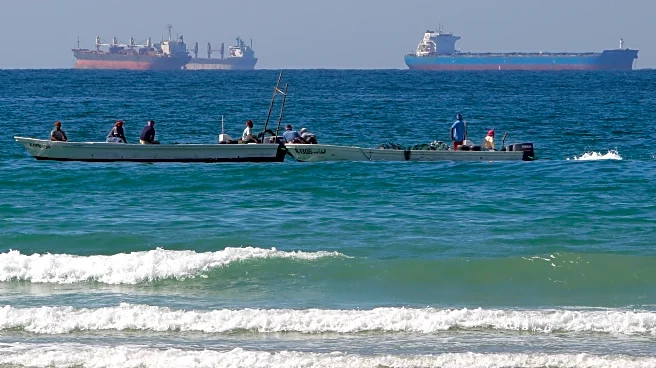
of oil tankers to navigate the Strait of Hormuz due to fears of attacks, leading to a historic supply crisis. The IEA has proposed releasing 400 million barrels of oil, which would be the largest release in its history. This proposal comes as Japan's Prime Minister Takaichi Sanae announced plans to independently release stockpiled oil. The IEA, which consists of 32 member countries from Europe, North America, and Northeast Asia, convened an emergency meeting to discuss the situation but has yet to make a public recommendation.
Why It's Important?
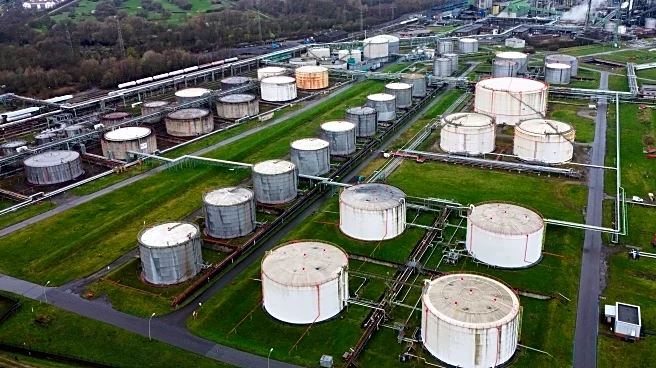
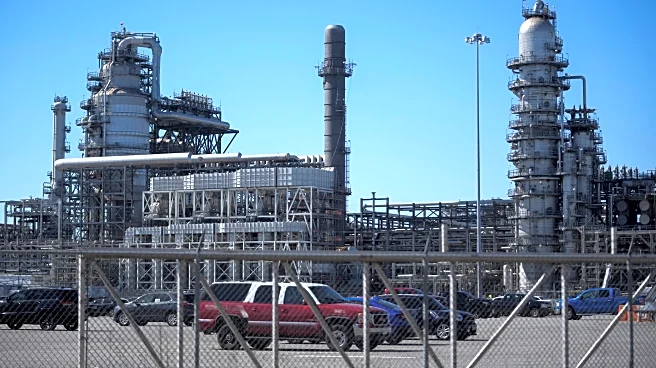
The call for releasing oil reserves is crucial as it addresses the immediate need to stabilize global oil prices, which have been affected by the supply disruption. The Strait of Hormuz is a critical maritime passage for global oil exports, and its blockage has significant implications for energy markets worldwide. The potential release of oil reserves by the IEA and individual countries like Japan could alleviate some of the pressure on oil prices, providing temporary relief to economies heavily reliant on oil imports. This situation underscores the vulnerabilities of global energy supply chains and the importance of strategic reserves in maintaining market stability during geopolitical crises.
What's Next?
The IEA's decision on whether to release oil reserves will be closely watched by global markets. If approved, the release could help stabilize oil prices in the short term. However, the ongoing conflict in Iran and the security of the Strait of Hormuz remain critical factors that could continue to influence oil supply and prices. Countries dependent on oil imports may need to explore alternative energy sources or increase their strategic reserves to mitigate future disruptions. The situation also highlights the need for diplomatic efforts to resolve the conflict and ensure the safe passage of oil through the Strait.