



What's Happening?
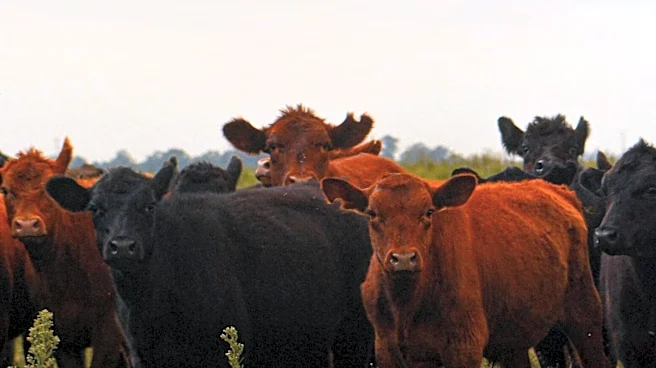
Drought conditions across the western U.S. are severely impacting cattle producers, making it difficult to maintain pastures and rebuild the nation’s cattle herd. Meteorologist Matt Makens reports that some areas are experiencing their worst drought in over
a century, with parts of Colorado and the Rocky Mountains facing conditions worse than any recorded since 1895. This prolonged drought leads to limited hay supplies and increased operating costs for cattle operations. While an El Niño weather pattern could bring much-needed rain, its effects on drought relief typically take months to materialize, usually from November through April, and even a strong El Niño may not fully alleviate the severe conditions. Louisiana ranchers are also grappling with similar challenges, including dry pastures and rising fuel costs, adding further pressure to their operations.
Why It's Important?
The escalating drought conditions pose a significant threat to the U.S. cattle industry and the broader national food supply. The difficulty in maintaining pastures directly impacts the ability of ranchers to feed their herds, leading to higher costs for supplemental feed and potentially forcing them to reduce herd sizes. This directly undermines efforts to rebuild the national cattle herd, which is crucial for ensuring a stable and affordable beef supply for consumers. The economic strain on cattle producers, including limited hay supplies and rising fuel costs, could lead to financial instability for many operations, particularly smaller, independent ranchers. A shrinking national herd could result in higher beef prices for consumers and increased reliance on imported meat, affecting both the U.S. economy and food security. The long-term implications of persistent drought could reshape the landscape of American cattle ranching.
What's Next?
Cattle producers in drought-stricken regions will continue to face immediate challenges related to feed and water availability, potentially leading to further herd reductions if conditions do not improve. The anticipated, but delayed, effects of El Niño will be closely watched, though meteorologists caution against expecting a complete reversal of the severe drought. Policymakers may need to consider additional disaster assistance for affected ranchers, as suggested by discussions around a year-end congressional package. In the long term, the industry may need to explore more drought-resilient farming practices and infrastructure investments to mitigate the impacts of future climate events. The ongoing pressure could also accelerate consolidation within the cattle industry, as smaller operations struggle to cope with rising costs and environmental challenges.
Beyond the Headlines
Beyond the immediate economic and agricultural impacts, the severe drought highlights the increasing vulnerability of U.S. food systems to climate change. The struggle to rebuild the cattle herd underscores the interconnectedness of environmental health, agricultural productivity, and national food security. This situation could prompt a reevaluation of land management practices in arid regions and encourage the adoption of more sustainable water usage and pasture management techniques. There are also ethical considerations regarding animal welfare during prolonged drought, as ranchers face difficult decisions about their herds. The long-term trend of intensifying droughts could lead to significant demographic shifts in agricultural communities and alter the cultural landscape of American ranching, pushing for innovations in livestock management and feed production to adapt to a changing climate.