



What's Happening?
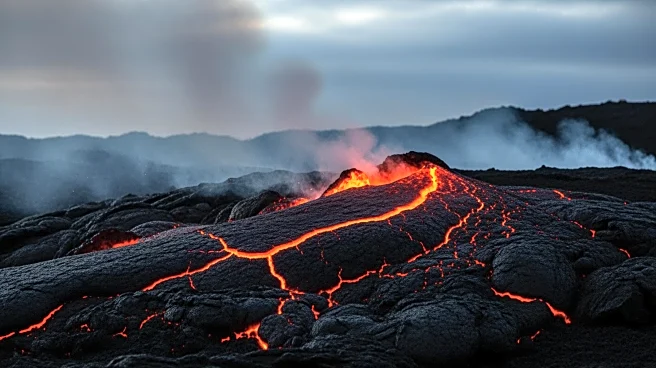
The Chichón volcano in southern Mexico is exhibiting unusual activity, prompting concerns among volcanologists. Recent observations have noted elevated lake temperatures, visible gas bubbling, and new sulfur formations within the crater. These changes
suggest active hydrothermal processes beneath the lake, although there are no current signs of an imminent eruption. The volcano, which erupted in 1982 causing significant destruction and loss of life, is now under increased scientific scrutiny. Researchers from the National Autonomous University of Mexico (UNAM) have reported consistent alterations in the crater lake's chemistry, including the presence of floating sulfur spheres and increased emissions of hydrogen sulfide and carbon dioxide. These developments indicate persistent subsurface heating and a dynamic internal system.
Why It's Important?
The renewed activity at Chichón is significant due to its history of catastrophic eruptions and the potential risks it poses to nearby communities. The 1982 eruption was one of the deadliest in modern Mexican history, and the current signs of unrest could lead to similar hazards if the situation escalates. The volcano's activity also has broader implications for global climate, as past eruptions have contributed to temporary global cooling. The ongoing monitoring efforts are crucial for early warning and risk mitigation, especially given the limitations in the current monitoring infrastructure. Enhancing these capabilities is vital to ensure public safety and preparedness in the event of further volcanic activity.
What's Next?
Scientists and local authorities are intensifying monitoring efforts to better understand the evolving conditions at Chichón. This includes deploying aerial drones and remote sensing platforms to track heat signatures and gas emissions. There is also a push for cross-agency collaboration to improve the monitoring network and ensure stable funding for these initiatives. Public education programs are being launched to inform local communities about potential volcanic hazards, which is critical for preparedness. While a large-scale eruption is not currently anticipated, experts remain cautious about the possibility of phreatic explosions, which can occur without warning.