



What's Happening?
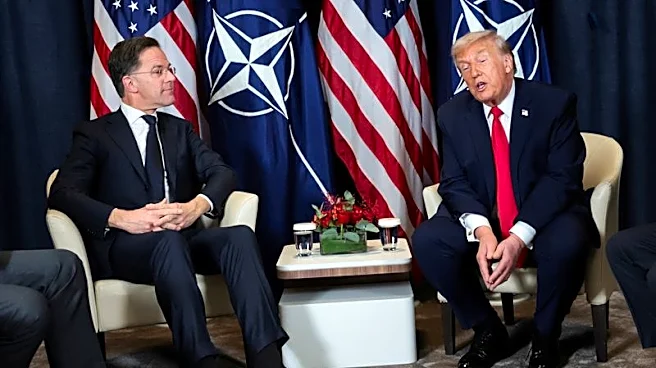
President Trump has announced a significant policy move, threatening to impose a 50% tariff on all goods from countries supplying military weapons to Iran. This announcement was made via a post on his Truth Social platform, emphasizing that the tariffs
would be implemented immediately and without any exemptions. This decision comes in the wake of the Supreme Court's recent ruling that curtailed Trump's ability to use the International Emergency Economic Powers Act for imposing customized tariffs. Despite this setback, Trump is exploring alternative tariff authorities to enforce his new policy. The countries most directly affected by this announcement include Russia and China, both of which have been identified as suppliers of military equipment to Iran.
Why It's Important?
The imposition of such tariffs could have significant implications for international trade and diplomatic relations. For the U.S., this move could strain relations with major global powers like Russia and China, potentially leading to retaliatory measures that could impact American businesses and consumers. Economically, the tariffs could lead to increased prices for goods imported from these countries, affecting various sectors reliant on these imports. Politically, this decision underscores President Trump's continued use of tariffs as a tool for foreign policy, despite legal challenges. It also highlights ongoing tensions in U.S.-Iran relations, particularly concerning military and nuclear capabilities.
What's Next?
The immediate next steps involve monitoring the reactions from the countries targeted by these tariffs. Russia and China may respond with their own economic measures, which could escalate into broader trade conflicts. Additionally, the U.S. administration will need to navigate the legal complexities of implementing these tariffs without the previously relied-upon legal framework. Domestically, businesses and trade groups may lobby against the tariffs, citing potential economic harm. Internationally, this move could influence ongoing negotiations and diplomatic efforts related to Iran's military activities and nuclear program.