





What's Happening?
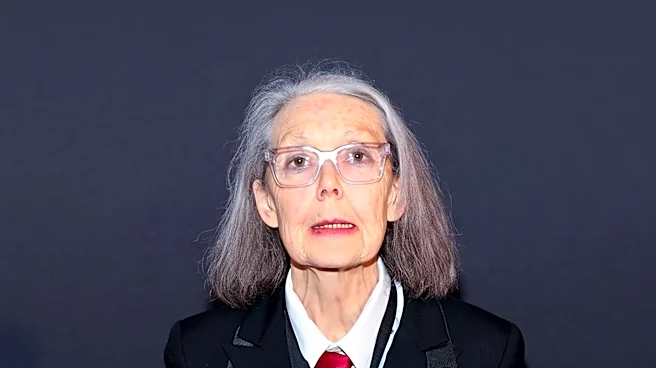
Palestinian American physician, poet, and translator Fady Joudah has released a new book, 'Exhibit G: Poems, Essays, and Photographs of Gaza.' The work is a collaboration that includes powerful texts by Joudah and a collection of photographs of Gaza presented
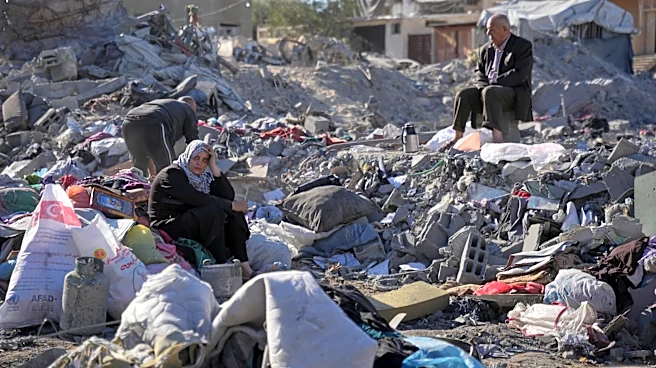
with Hani Almadhoun and the Gaza Soup Kitchen. Joudah's previous works include 'The Earth in the Attic,' which won the 2007 Yale Series of Younger Poets competition, and translations of Mahmoud Darwish's poetry, which earned him a Banipal prize and a PEN USA award. 'Exhibit G' aims to confront readers with the reality of Gaza without translating the experience into what Joudah terms 'Palestine in English.' The book features photographs taken by Palestinians of Palestinians, focusing on daily life and resilience amidst hardship, rather than solely on gore. Joudah's personal connection to Gaza, with family residing there, further informs the depth and immediacy of the work.
Why It's Important?
'Exhibit G' is significant for its unique approach to documenting the ongoing situation in Gaza, offering a perspective rooted in Palestinian experience. By curating photographs taken by local Palestinians, the book challenges external narratives and aims to present a more authentic portrayal of life, resilience, and the human spirit amidst conflict. This work contributes to a broader understanding of the cultural and human impact of geopolitical events, moving beyond abstract reporting to personal narratives and visual evidence. It highlights the role of literature and art in bearing witness and fostering empathy, providing a platform for voices that might otherwise be marginalized. The book's emphasis on the 'vibrancy of color' and the 'insistence on it' in the photographs underscores a narrative of life persisting despite immense challenges, offering a counter-narrative to purely tragic portrayals.
What's Next?
The release of 'Exhibit G' is likely to spark further discussions and critical engagement within literary and humanitarian circles. The book's unique blend of poetry, essays, and photography may influence how future narratives about conflict zones are constructed and consumed, encouraging more nuanced and internally-sourced perspectives. It could also inspire other artists and writers to explore similar multi-modal approaches to storytelling, particularly in documenting underrepresented experiences. The work's potential to foster deeper understanding and empathy may lead to increased awareness and support for humanitarian efforts in Gaza. Furthermore, 'Exhibit G' could become a significant text in academic studies focusing on contemporary Palestinian literature, visual culture, and the ethics of representation in conflict journalism.
Beyond the Headlines
'Exhibit G' delves into profound ethical and cultural dimensions by questioning how suffering is consumed and represented in media. Joudah's critique of 'Palestine in English' highlights the challenges of translating complex realities without losing authenticity or perpetuating stereotypes. The book implicitly asks readers to consider their role as witnesses and the responsibility that comes with engaging with such powerful imagery and narratives. By focusing on photographs taken by Palestinians, the project reclaims agency in visual storytelling, offering an internal gaze rather than an external one. This approach challenges conventional media portrayals that often abstract or sensationalize conflict, instead emphasizing the dignity and humanity of those affected. The work also explores the long-term psychological and cultural impacts of conflict, particularly on children, and the enduring human capacity for resilience and the preservation of identity.