





What's Happening?
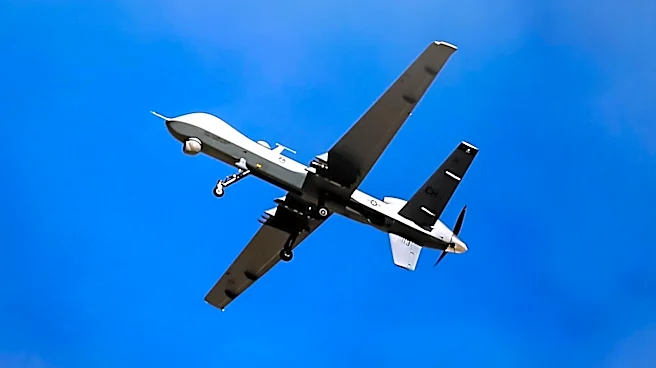
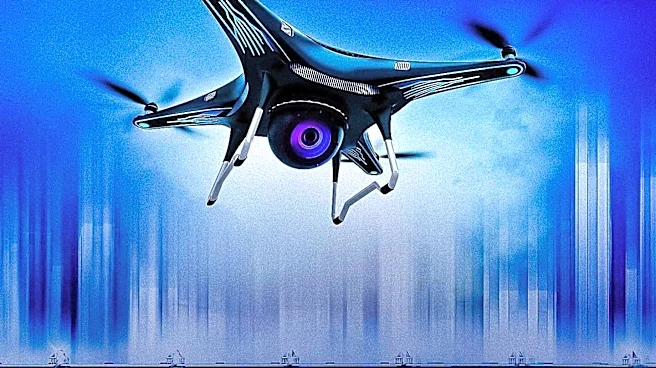
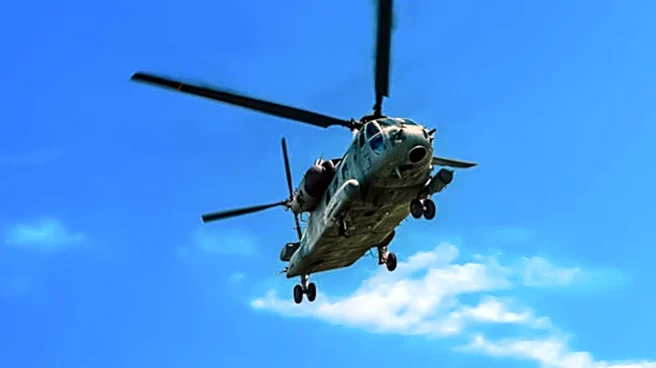
The U.S. Army has successfully demonstrated its Air-Launched Effects (A-LE) system, launching and controlling multiple autonomous drones from a UH-60 Black Hawk helicopter. This capability allows the helicopter to function as both a launcher and command
node for autonomous systems, extending surveillance, targeting, and precision-strike capabilities. The demonstration is part of the Army's broader push towards networked, manned-unmanned teaming, enhancing operational flexibility and survivability in contested environments.
Why It's Important?
The successful demonstration of the A-LE system represents a significant advancement in military technology, highlighting the U.S. Army's commitment to integrating autonomous systems into its operations. This capability enhances the Army's ability to conduct reconnaissance and precision strikes while minimizing risk to personnel. The development aligns with the Army's modernization strategy, focusing on multi-domain operations and human-machine teaming. The integration of autonomous systems is expected to improve battlefield awareness and decision-making, providing a strategic advantage in future conflicts.
What's Next?
The U.S. Army will likely continue to refine and expand the A-LE system, integrating it with other platforms and capabilities. Future developments may include enhanced sensors, longer-range systems, and improved electronic warfare payloads. The Army's focus on rapid experimentation and fielding of new technologies will drive further advancements in autonomous systems. The success of the A-LE system may also influence other branches of the military and allied forces to adopt similar capabilities, promoting greater interoperability and collaboration.