
What's Happening?
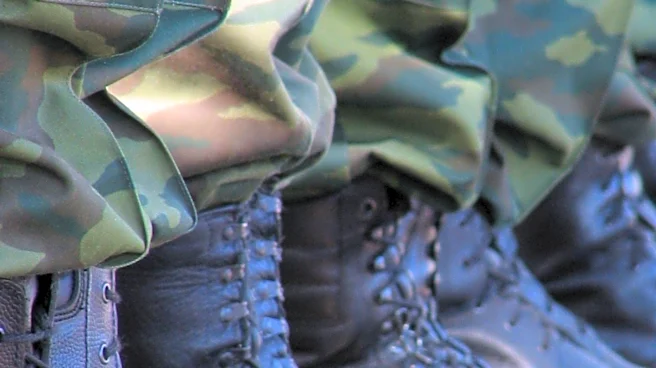
By order of Belarusian President Alexander Lukashenko, an inspection of the combat readiness of the State Border Committee’s units has commenced in Belarus. The inspection will specifically focus on the border
service’s mobile units. According to Alexander Volfovich, State Secretary of the Belarusian Security Council, the maneuver groups in all formations and detachments of the Border Guard Service have been brought to full combat readiness. This development was reported by the state news agency 'BelTA' on November 16. Belarus has been conducting regular military exercises on its territory since the Russian military invasion of Ukraine in February 2022. Belarusian authorities supported the Russian aggression by allowing the Russian army to use Belarus’s military infrastructure and airspace for the invasion and strikes against Ukrainian cities.
Why It's Important?
The combat readiness inspection of Belarusian border troops, ordered by President Lukashenko, carries significant implications for regional stability, particularly given Belarus's close ties with Russia and its role in the ongoing war in Ukraine. While Belarus is not considered a direct participant in the aggression under Geneva Conventions criteria, its support for Russia, including providing military infrastructure and airspace, has led to international sanctions from Western countries, the European Union, and Ukraine. This inspection could be interpreted as a show of force, a preparation for potential border incidents, or a signal of continued alignment with Russia's military objectives. For the U.S. and its NATO allies, such military activities near the borders of NATO member states like Poland and Lithuania are a cause for concern, potentially leading to increased surveillance, defensive postures, and diplomatic pressure to de-escalate tensions in the region.
What's Next?
The immediate next steps will likely involve the completion of the combat readiness inspection, with potential public statements from Belarusian officials regarding its findings or any subsequent military exercises. The international community, particularly NATO and the European Union, will closely monitor Belarus's border activities and any movements of its military units. There could be increased intelligence gathering and analysis by Western powers to assess the intent behind these inspections. Diplomatic efforts may intensify to urge Belarus to refrain from actions that could further destabilize the region. The ongoing sanctions against Belarus are likely to remain in place, and further measures could be considered if its military posture is perceived as increasingly aggressive or directly supportive of Russian military operations against Ukraine.
Beyond the Headlines
The inspection of Belarusian border troops highlights the complex and interconnected nature of security in Eastern Europe. Belarus's actions, while seemingly internal, are deeply intertwined with the broader geopolitical conflict in Ukraine and the strategic competition between Russia and the West. This event could be a manifestation of Belarus's efforts to assert its sovereignty and military capabilities, or it could be a direct response to perceived threats or directives from Moscow. The long-term implications include the potential for a more militarized border region, increased risk of miscalculation or accidental escalation, and a deepening of Belarus's integration into Russia's military-political sphere. This situation also raises questions about the future of Belarus's independence and its role in the evolving security architecture of Europe, potentially leading to a prolonged period of heightened tension and military readiness in the region.