





What's Happening?
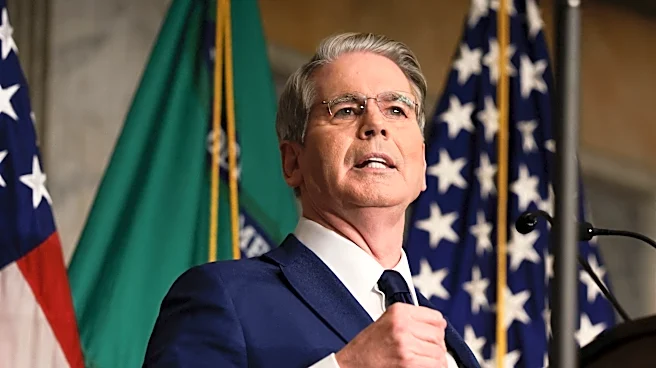
Representative Mike Lawler (R-New York) has publicly disagreed with President Trump's assessment of the ongoing military conflict with Iran, which the President described as 'small potatoes.' Lawler emphasized the seriousness of any military escalation,
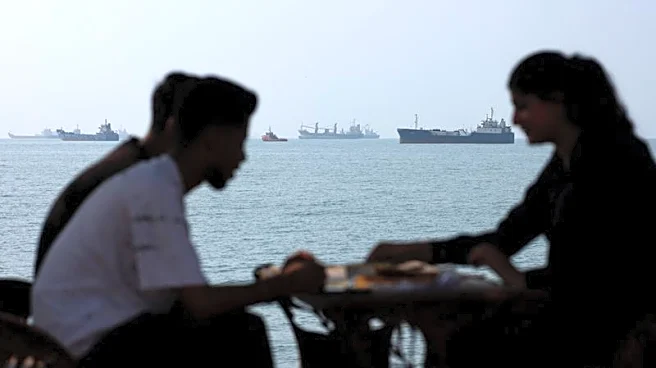
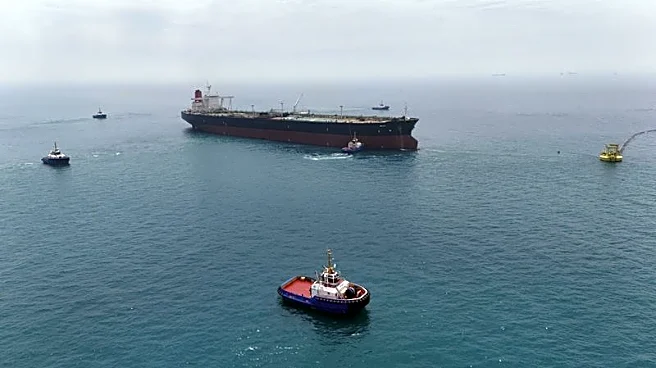
stating that it is 'certainly not small potatoes.' His comments come as Iran attempts to establish a maritime 'exclusion zone' around the Strait of Hormuz, a move intended to counter a U.S. naval blockade. The U.S. had previously disabled three Iranian oil tankers following Iran's missile launch at a U.S. aircraft carrier. Lawler highlighted the critical importance of preventing Iran from acquiring nuclear weapons, financing terrorism through groups like Hamas, Hezbollah, and the Houthis, and mass-producing ballistic missiles and drones that are being used by Russia against Ukraine. U.S. Energy Secretary Chris Wright also cautioned that a nuclear agreement with Iran might not materialize, suggesting that the focus might shift to destroying their capabilities or awaiting a future administration in Iran.
Why It's Important?
This divergence in rhetoric between a prominent Republican Congressman and President Trump underscores potential divisions within the party regarding the severity and handling of international conflicts, particularly with Iran. Lawler's strong stance on the critical nature of the situation highlights the broader U.S. national security interests at stake, including nuclear non-proliferation, counter-terrorism efforts, and regional stability in the Middle East. The ongoing tensions in the Strait of Hormuz, a vital global shipping lane, have significant economic implications, potentially disrupting oil supplies and impacting international trade. The U.S. caution regarding a nuclear deal with Iran suggests a complex and potentially prolonged diplomatic and military challenge, with consequences for global energy markets and geopolitical alliances. The situation also reflects the persistent threat of state-sponsored terrorism and the proliferation of advanced weaponry, which could destabilize multiple regions.
What's Next?
The immediate future will likely see continued efforts by Iran to assert its presence in the Strait of Hormuz, potentially leading to further confrontations with U.S. naval forces. The U.S. administration will need to navigate these challenges while also considering the possibility of a non-nuclear agreement approach, focusing on dismantling Iran's capabilities rather than pursuing a comprehensive deal. The differing views within U.S. political circles, as exemplified by Representative Lawler's comments, could influence future policy debates and strategies concerning Iran. Internationally, the situation could prompt increased diplomatic engagement from allies and adversaries alike, as the implications of a nuclear-armed Iran or an unchecked escalation in the region are far-reaching. The ongoing conflict between Saudi Arabia and Houthi rebels in Yemen, which threatens shipping through another crucial strait, further complicates the regional security landscape.
Beyond the Headlines
The differing perspectives on the Iran conflict, particularly between a sitting President and a Congressman from his own party, reveal the complexities of foreign policy decision-making and the various interpretations of national security threats. This internal debate could signal a shift in how future administrations approach international adversaries, potentially moving towards more assertive or nuanced strategies. The emphasis on preventing Iran from financing terrorism and developing advanced weaponry highlights the evolving nature of modern warfare, where non-state actors and technological proliferation play increasingly significant roles. The broader implications extend to the global non-proliferation regime, as the failure to secure a nuclear deal with Iran could set a precedent for other nations seeking to develop nuclear capabilities. The economic ramifications, particularly concerning oil transit and global trade routes, underscore the interconnectedness of geopolitical stability and economic prosperity.