


What's Happening?
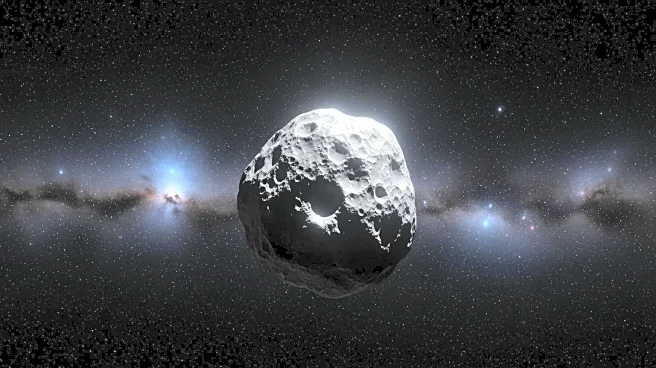
A research team led by the Institute of Space Sciences (ICE-CSIC) has identified a class of asteroids with olivine and spinel signatures as promising targets for future space mining. The study, published in the Monthly Notices of the Royal Astronomical
Society, focuses on C-type asteroids, which are rich in carbon and believed to be the original sources of carbonaceous chondrites. These asteroids could serve as important material reservoirs, offering insights into the solar system's formation. The research emphasizes the need for detailed chemical studies and new sample return missions to confirm the viability of these asteroids for resource extraction.
Why It's Important?
The findings have significant implications for the future of space exploration and resource utilization. As Earth's resources become increasingly strained, space mining offers a potential solution to meet the growing demand for materials. Identifying asteroids with valuable minerals could reduce the environmental impact of terrestrial mining and support long-duration space missions by providing in-situ resources. The study also highlights the potential for space mining to contribute to planetary defense by altering the trajectories of hazardous asteroids.
What's Next?
The research suggests that future missions should focus on asteroids with water-bearing minerals, which could be used as fuel or for life support in space. The development of technology for extracting resources in low-gravity environments is crucial. As interest in space mining grows, international collaboration and regulatory frameworks will be necessary to manage resource extraction and ensure sustainable practices. The study's findings could guide future missions and technological advancements in space resource utilization.