







What's Happening?
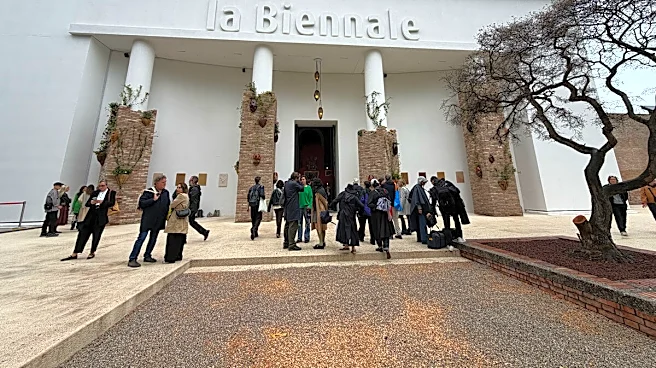
At the Venice Biennale, a group of artists is threatening legal action to have their names removed from a visitors' ballot. This ballot was introduced to replace the traditional jury awards for the best national pavilion and overall participants, following
the jury's resignation in protest of Israel's and Russia's participation. The artists argue that the voting process lacks transparency and accountability. Despite their request to be removed from the ballot, the Biennale has decided to keep all names to ensure freedom of expression, although none of the signatories will be considered for the prizes. The protest has gained significant attention, with artists from around 70 main show participants and nearly 40 national pavilions, including Iceland, Norway, and Denmark, joining the call.
Why It's Important?
The controversy at the Venice Biennale highlights significant tensions within the art community regarding political participation and representation. The decision to allow visitor voting instead of a jury could set a precedent for how art competitions are judged, potentially impacting the credibility and prestige of such awards. The artists' protest underscores broader issues of governance and transparency in cultural institutions. The Biennale's response to maintain the ballot despite the artists' objections may influence future participation and the willingness of artists to engage with the event. This situation also reflects ongoing geopolitical tensions, as the inclusion of Russia and Israel has sparked significant debate.
What's Next?
The artists have initiated steps toward legal action, which could lead to a court case if the Biennale does not comply with their demands. The outcome of this legal challenge could influence how future art events handle similar disputes. Additionally, the Biennale's decision to proceed with visitor voting may face further scrutiny and criticism from the art community and beyond. The situation may prompt other cultural institutions to reevaluate their policies on participation and award processes, especially in politically sensitive contexts.