




What's Happening?
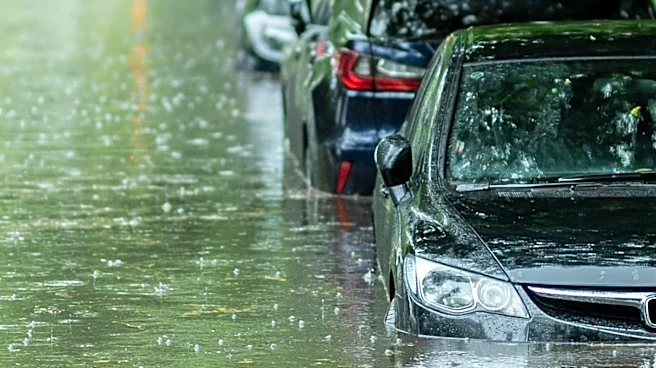
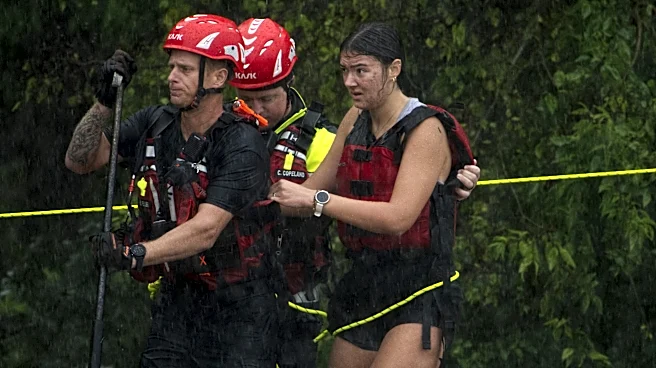
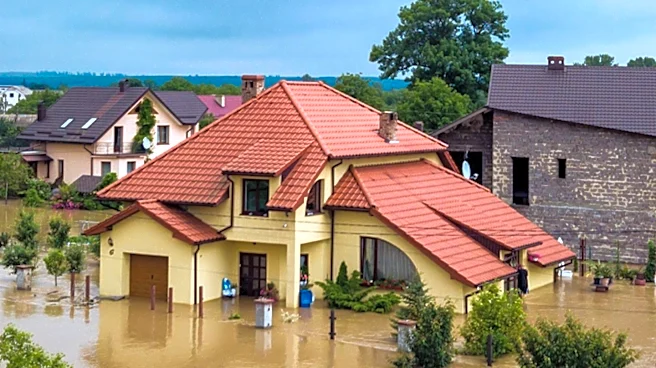
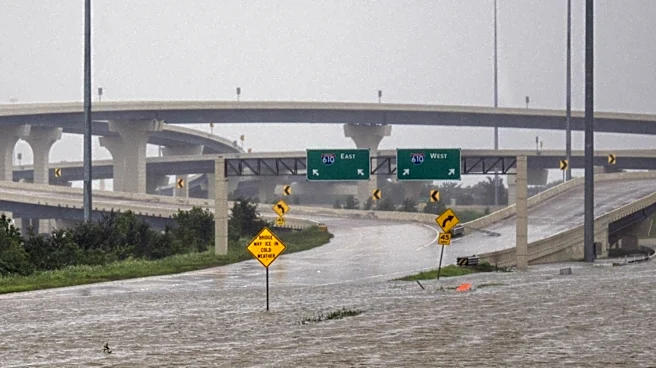
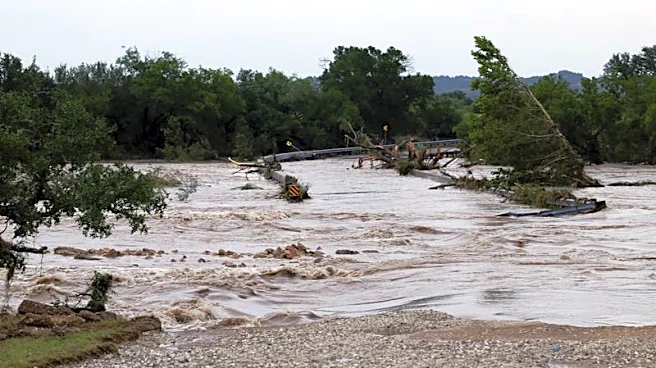
Catastrophic flash floods in Texas have resulted in the deaths of two individuals and necessitated hundreds of rescues, according to Governor Greg Abbott. The floods have particularly impacted areas still recovering from similar devastation a year ago.
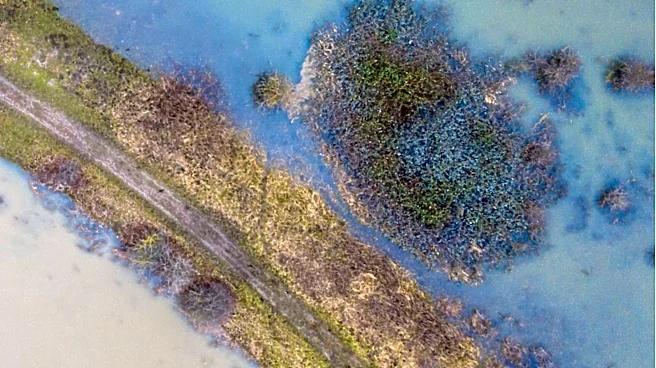
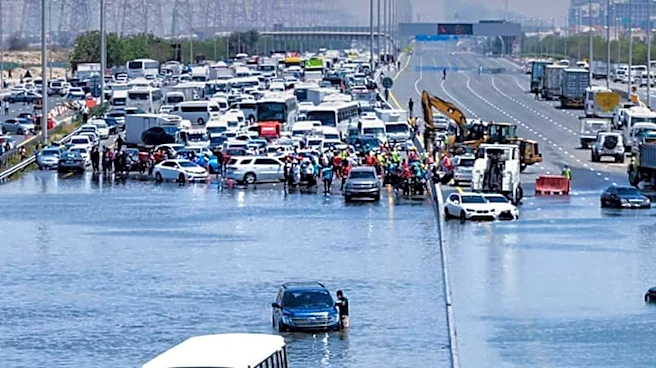
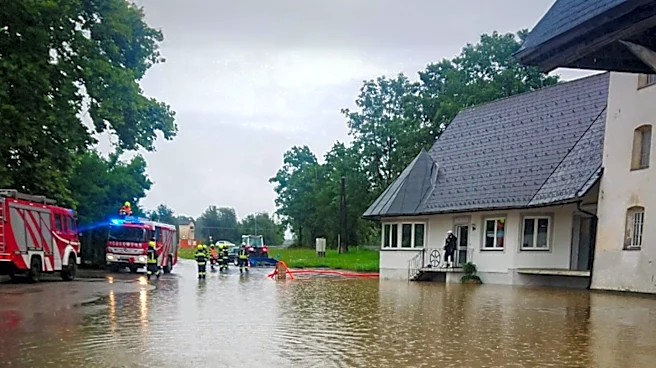
Rescuers have been deployed in boats and helicopters, saving over 200 people, including those trapped in vehicles and homes. The National Weather Service has issued urgent warnings as rivers continue to rise, with some areas experiencing over 30 feet of water. The floods have been exacerbated by up to 28 inches of rain in Uvalde County over the past three days, with more rain expected. The situation has prompted the deployment of over 1,300 first responders to assist in rescue operations.
Why It's Important?
The flash floods in Texas highlight the ongoing vulnerability of the region to extreme weather events, particularly in areas still recovering from previous disasters. The repeated flooding underscores the need for improved infrastructure and emergency preparedness to mitigate the impact of such natural disasters. The economic and social implications are significant, as communities face the challenge of rebuilding and addressing the immediate needs of displaced residents. The situation also raises questions about climate resilience and the effectiveness of current warning systems and emergency response strategies.
What's Next?
As the situation develops, continued monitoring and response efforts are critical. Authorities are likely to focus on ensuring the safety of residents and providing necessary resources for recovery. The potential for further rainfall necessitates ongoing vigilance and preparedness. In the longer term, discussions around infrastructure improvements and climate adaptation strategies are expected to gain momentum, as stakeholders seek to prevent similar disasters in the future.