
What's Happening?
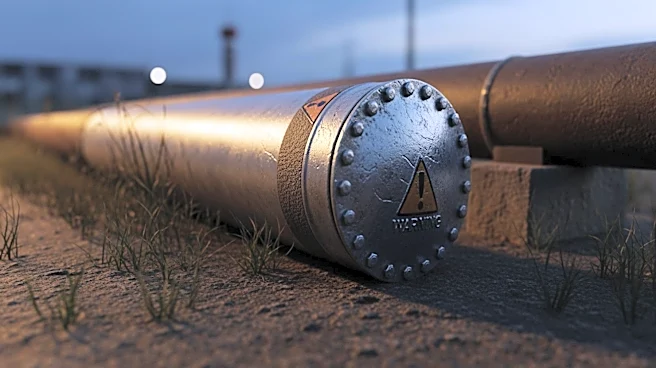
Serbian authorities have discovered an explosive device near the TurkStream pipeline, which connects Serbia to Hungary. This incident comes just days before crucial elections in Hungary, where energy security
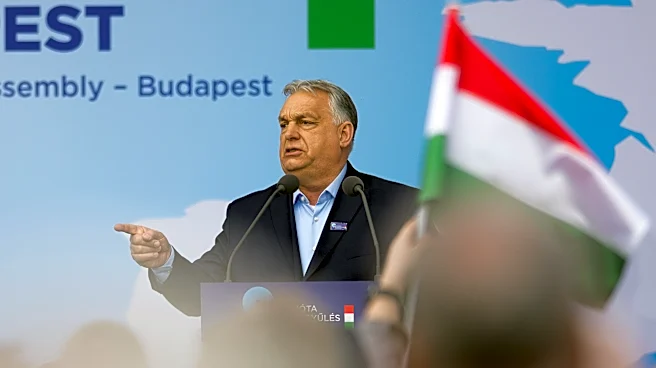
has been a central campaign issue. Hungarian Prime Minister Viktor Orbán has convened an emergency defense council and placed the pipeline under reinforced military protection. Orbán's main opponent, Péter Magyar, has suggested that the incident could be a false flag operation staged by allies of Russian President Vladimir Putin to influence the election outcome. The discovery has heightened tensions and raised concerns about the security of Hungary's energy supply.
Why It's Important?
The discovery of an explosive near the TurkStream pipeline has significant implications for Hungary's energy security and political landscape. As Hungary relies on Russian natural gas, any threat to the pipeline poses a risk to the country's energy sovereignty. The timing of the incident, just days before the elections, has fueled speculation about its potential use as a political tool. If proven to be a false flag operation, it could undermine trust in the electoral process and further polarize the political environment. The situation highlights the complex interplay between energy security, geopolitics, and domestic politics in Hungary.
What's Next?
The Hungarian government is likely to increase security measures around critical infrastructure to prevent further incidents. The outcome of the upcoming elections will be closely watched, as it could influence Hungary's future energy policies and its relationship with Russia. If Orbán's opponent, Péter Magyar, gains traction, there may be a shift towards reducing reliance on Russian energy and exploring alternative sources. The incident may also prompt discussions within the European Union about energy security and the need for coordinated responses to potential threats. The political and security dynamics in Hungary will continue to evolve in the coming weeks.
Beyond the Headlines
The incident near the TurkStream pipeline raises broader questions about the role of energy infrastructure in geopolitical conflicts. As countries increasingly rely on pipelines for energy supply, they become vulnerable targets for political manipulation and sabotage. The situation in Hungary underscores the need for robust security measures and international cooperation to protect critical infrastructure. Additionally, the potential use of false flag operations in political campaigns highlights the ethical challenges in maintaining fair and transparent electoral processes. The incident serves as a reminder of the complex interdependencies between energy, politics, and security in the modern world.