







What's Happening?
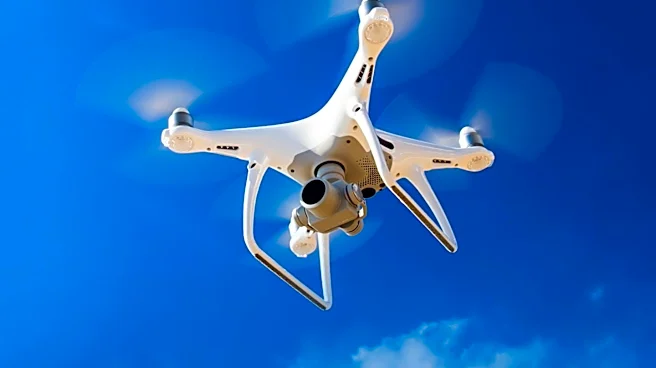
Lithuanian authorities issued a 'possible air threat' warning and scrambled NATO fighter jets after an unidentified object entered its airspace from Belarus. The alert, which urged residents to seek safe locations, was issued shortly before 10 AM local
time and lasted approximately 40 minutes before being canceled. Vilmantas Vitkauskas, head of Lithuania’s National Crisis Management Centre, stated that a search was underway to determine the nature of the object, which initially appeared on radar to resemble a drone. However, officials could not fully identify it before lifting the alert, noting that certain parameters suggested a speed lower than typical for a drone, potentially indicating an anomaly or even bird migration. This incident follows a previous drone sighting last month that was later attributed to birds, and an Italian fighter jet stationed in Lithuania shot down a suspected drone in September, marking the first reported instance of a UAV being brought down over Lithuania. The country's strategically exposed position, bordering Belarus and Russia's Kaliningrad exclave, contributes to heightened security concerns.
Why It's Important?
This incident underscores the escalating security pressures along NATO's eastern flank, particularly for Baltic states like Lithuania. The repeated incursions of unidentified objects, whether drones or other anomalies, highlight the challenges NATO forces face in monitoring and securing increasingly crowded and contested airspace. The rapid response, involving a public alert and the scrambling of fighter jets, demonstrates the heightened state of readiness and the reduced margin for error in the region. Such events can strain resources, create public anxiety, and potentially lead to miscalculations if the nature of the incursions is not quickly and accurately determined. The ongoing war in Ukraine has intensified these concerns, making any airspace violation a significant security event. The incident also emphasizes the need for advanced detection and interception capabilities against small, slow-moving aerial threats, which older radar systems may struggle to track effectively. The collaboration between Lithuania and Poland on evacuation planning further illustrates the regional apprehension and the proactive measures being taken to address potential crises.
What's Next?
Lithuanian authorities will continue their investigation to definitively identify the object that entered their airspace. This will likely involve analyzing radar data, searching for any debris, and potentially collaborating with neighboring countries. The incident will likely reinforce the ongoing efforts by Lithuania and other Baltic states to strengthen their air defense capabilities, including investments in counter-drone technologies and military infrastructure. NATO's Baltic Air Policing mission will likely maintain its heightened vigilance, with alliance members continuing to provide rotating fighter detachments to secure the region's airspace. The incident may also prompt further discussions within NATO regarding standardized protocols for responding to unidentified aerial phenomena, especially those originating from or near conflict zones. Given the current geopolitical climate, any future airspace incursions will likely trigger similar rapid responses, maintaining a high level of tension and readiness along the eastern border of the alliance.
Beyond the Headlines
The recurring nature of these airspace incidents, even when inconclusive, points to a broader psychological and strategic impact. The constant threat of unidentified objects, whether actual drones or other phenomena, contributes to a climate of uncertainty and vigilance that can wear on both military personnel and the civilian population. This 'new security environment' forces a re-evaluation of what constitutes a credible threat and how quickly a response must be mounted. The difficulty in distinguishing between genuine threats, anomalies, or even bird migrations highlights the limitations of current surveillance technologies against diverse and evolving aerial challenges. Furthermore, the incident could be seen as part of a larger pattern of probing NATO's defenses, testing response times, and potentially gathering intelligence. The emphasis on domestic defense production and military innovation, as seen in Latvia's increased defense spending, suggests a long-term commitment to adapting to these new forms of warfare and maintaining deterrence in a volatile region.