


What's Happening?
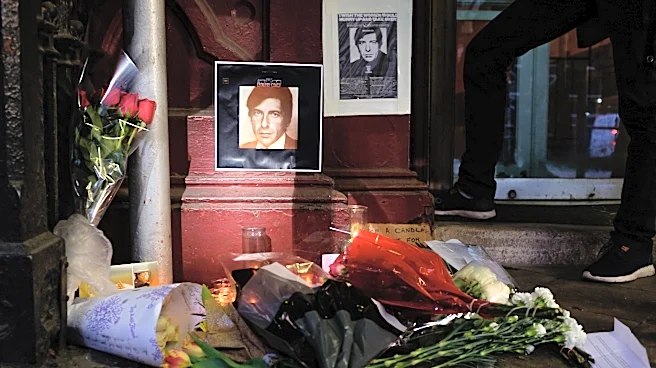
Italian Prime Minister Giorgia Meloni extended her condolences following the death of Toni Capuozzo, a renowned Italian war correspondent, who passed away at the age of 77. Capuozzo, known for his extensive reporting from conflict zones such as the former
Yugoslavia and the Middle East, had revealed he was battling cancer in October. Prime Minister Meloni, in a post on X, stated that with his death, 'Italian journalism loses an unmistakable voice, who throughout his career chronicled so many major events that shaped history through his reporting and eyewitness accounts.' Deputy premiers Antonio Tajani and Matteo Salvini also paid tribute to Capuozzo, hailing him as 'courageous.' Capuozzo was a prominent figure at Mediaset news for over three decades, and his career included notable acts such as bringing a wounded baby from Sarajevo to Italy for care.
Why It's Important?
The passing of Toni Capuozzo marks the loss of a significant voice in Italian journalism, whose work profoundly impacted public understanding of international conflicts. His dedication to reporting from war zones, often at great personal risk, provided Italians with firsthand accounts of historical events, shaping public opinion and fostering empathy for those affected by conflict. Prime Minister Meloni's tribute underscores the national recognition of his contributions, highlighting the role of courageous journalism in a democratic society. Capuozzo's ability to bring complex geopolitical realities into Italian living rooms helped bridge the gap between distant conflicts and domestic awareness. His legacy serves as a reminder of the importance of independent and fearless reporting, particularly in an era of rapidly evolving media landscapes and the spread of misinformation. His work also exemplified the humanitarian aspect of journalism, as demonstrated by his act of bringing a wounded child to safety.
What's Next?
The immediate aftermath of Toni Capuozzo's passing will likely see continued tributes and reflections on his extensive career and impact on Italian journalism. Media outlets will undoubtedly re-broadcast his iconic reports and documentaries, allowing new generations to appreciate his contributions. Discussions may also arise regarding the future of war correspondence and the challenges faced by journalists in increasingly complex and dangerous global environments. His legacy could inspire new initiatives in journalism education, emphasizing ethical reporting, humanitarian considerations, and the importance of bearing witness to historical events. While there are no direct policy implications, the collective remembrance of Capuozzo's work may reinforce the value placed on investigative journalism and the freedom of the press within Italy and beyond.
Beyond the Headlines
Toni Capuozzo's career transcends mere news reporting; it embodies the ethical and moral responsibilities of journalism in times of crisis. His act of bringing a wounded baby from Sarajevo to Italy highlights the profound human element often overlooked in geopolitical narratives, demonstrating how individual actions can have a lasting impact. Culturally, Capuozzo's work helped shape Italy's collective memory of major international conflicts, influencing public discourse and national identity. His shift in political views from the radical left to conservative positions, including criticism of European policy on the green transition and migration, also reflects broader ideological evolutions within European society. The long-term implication of his passing is a renewed appreciation for the role of veteran journalists in providing historical context and critical analysis, especially in an age where information is abundant but verified, in-depth reporting is increasingly scarce. His life serves as a testament to the enduring power of storytelling and its capacity to inform, inspire, and provoke thought.