







What's Happening?
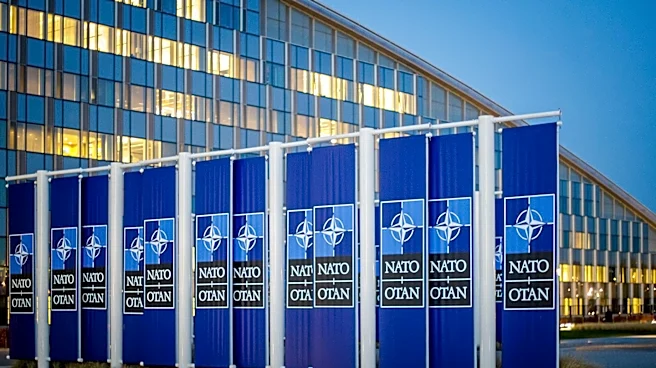
American and British soldiers, along with their engineering teams, are soon to arrive in Poland to strengthen NATO's eastern flank. This announcement was made by Polish Deputy Prime Minister and Minister of National Defense Władysław Kosiniak-Kamysz.
He also stated that 80 French military engineers would join the 'East Shield' team. The 'East Shield' program, which has been ongoing for two years, involves the construction of fortifications, drone systems, and anti-drone systems along Poland's borders with Russia (Kaliningrad Oblast), Belarus, and Ukraine. Kosiniak-Kamysz highlighted that after two years, preliminary operational readiness has been achieved in many areas. The program aims to enhance deterrence capabilities through long-range, precise targeting and strategic strike capabilities, which are considered crucial for Poland's security. The Polish Minister of National Defense emphasized that the 'East Shield' is no longer just a national project but has become an allied project, with German sappers already assisting in its construction. Approximately 10 billion euros have been allocated for actions related to securing the eastern border.
Why It's Important?
The deployment of U.S. and British soldiers to Poland, alongside French and German engineers, signifies a significant multinational effort to bolster NATO's collective defense posture on its eastern flank. This move underscores the heightened security concerns in Eastern Europe, particularly in light of ongoing geopolitical tensions. For the U.S., this deployment reinforces its commitment to NATO allies and regional stability, demonstrating a tangible presence to deter potential aggression. The 'East Shield' program, with its focus on fortifications, drone, and anti-drone systems, represents a modern approach to border security and defense, integrating advanced technologies to enhance surveillance and response capabilities. The involvement of multiple NATO members transforms this from a national Polish initiative into a broader allied project, distributing the burden and showcasing unity. This increased military presence and infrastructure development are critical for reassuring allies and sending a clear message of deterrence to potential adversaries, thereby contributing to the overall security architecture of the region and indirectly safeguarding U.S. interests in a stable Europe.
What's Next?
The arrival of U.S. and British soldiers, along with French engineers, will mark the next phase of the 'East Shield' program, focusing on the continued reinforcement of Poland's eastern borders. This multinational collaboration is expected to further integrate allied forces and enhance interoperability in defensive operations. Minister Kosiniak-Kamysz indicated that more partners might join the effort, suggesting a potential expansion of the allied involvement in strengthening NATO's eastern flank. The program will continue to develop its 'Eastern Sword' operation, which prioritizes long-range and precise strike capabilities for deterrence. Additionally, the Polish government plans to launch a competition for 1.5 billion PLN in funding for healthcare facilities, particularly in northeastern Poland, to support civilian infrastructure that can also aid military personnel. This suggests a comprehensive approach to national security, combining military readiness with civilian support systems. The ongoing development of drone and anti-drone systems, artificial intelligence, and cyber defense capabilities within the 'East Shield' framework indicates a continuous adaptation to modern threats.
Beyond the Headlines
The multinational effort to fortify NATO's eastern flank, particularly with the involvement of U.S. and British forces, extends beyond immediate military implications. It highlights a strategic shift towards a more robust and integrated defense posture in response to evolving security landscapes. This collaboration fosters deeper military-to-military relationships and intelligence sharing among allied nations, enhancing collective security and deterrence. The emphasis on advanced technologies like drone systems, anti-drone measures, artificial intelligence, and cyber defense within the 'East Shield' program reflects a recognition of hybrid warfare threats and the need for sophisticated countermeasures. Furthermore, the integration of civilian infrastructure, such as healthcare facilities, into national security planning underscores a comprehensive approach to resilience, acknowledging that national defense encompasses both military and societal preparedness. This long-term commitment to strengthening the eastern flank could lead to sustained investment in defense industries and technological innovation across participating nations, potentially influencing future military doctrines and procurement strategies.