



What's Happening?
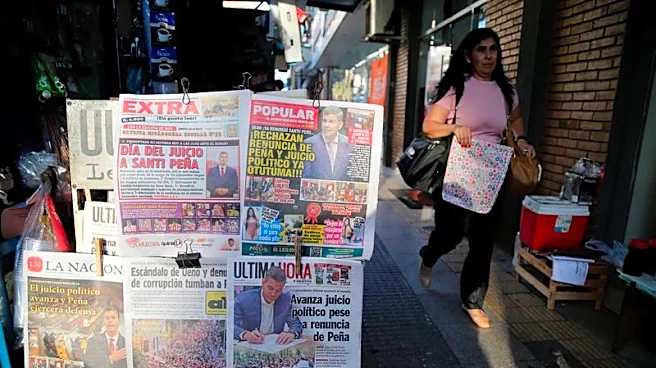
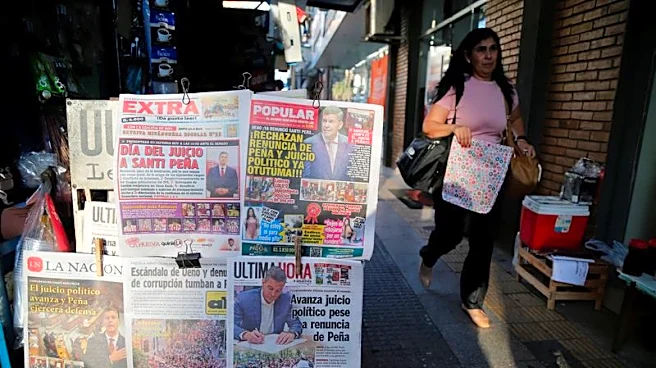
Paraguay's President Santiago Peña has been impeached and subsequently arrested following the collapse of Ueno Bank, a prominent digital financial institution. The crisis began when Paraguay's Central Bank took control of Ueno Bank on November 2, 2026,
after determining its financial position had deteriorated below regulatory requirements. This action locked customers out of their accounts, leading to widespread protests. Investigations revealed that Ueno Bank had accumulated nearly 3 million customer accounts and held approximately $809 million from government institutions, including $355 million from the Social Security Institute. Regulators had previously identified serious issues, including large loans to companies connected to the bank's owners and transactions designed to conceal these relationships. President Peña, who had invested in a company belonging to Ueno's business group and received loans from the bank, was accused of instigating the placement of public funds at Ueno. Additionally, he appointed Carlos Carvallo Spalding, former chairman of Financiera Ueno (which became Ueno Bank), to lead the Central Bank, raising conflict of interest concerns. Carvallo is also facing charges for allegedly misleading lawmakers about Ueno's financial condition.
Why It's Important?
The Ueno Bank collapse and subsequent impeachment of President Peña have triggered a national reckoning in Paraguay over political influence, financial oversight, and the safety of public money. The scandal has severely damaged Paraguay's reputation for economic stability, which the administration had actively promoted, even achieving its first investment-grade credit rating from Moody's in 2024. The crisis exposes vulnerabilities in the country's financial regulatory system and raises critical questions about the independence of financial supervision from political ties. The exposure of $809 million in public funds to Ueno's failure, including significant amounts from pension and healthcare programs, highlights the potential for widespread public sector losses and disruption of essential services. This event could deter foreign investment and undermine public confidence in both the banking sector and government institutions, necessitating significant efforts from the new administration to restore trust and demonstrate robust financial governance.
What's Next?
Following President Peña's removal, Vice President Pedro Alliana has assumed the presidency, inheriting a significant banking crisis and a government facing a profound loss of public confidence. The immediate challenge for the new administration is to restore access to savings and payments for Ueno Bank customers and to address the uncertainty surrounding the public funds held by the failed bank. Authorities have activated the country's deposit-guarantee system, with 1.2 million depositors receiving about $160 million by November 7, but larger deposits remain unresolved. Criminal investigations are ongoing against former President Peña and former Central Bank head Carlos Carvallo Spalding, with both facing charges related to breach of trust and other offenses. The new government will likely face pressure to implement stronger financial regulations and ensure greater independence for regulatory bodies to prevent similar crises and rebuild investor confidence. The long-term political stability of Paraguay will depend on how effectively the Alliana administration manages these challenges and addresses the underlying issues of corruption and oversight.
Beyond the Headlines
The Ueno Bank crisis extends beyond immediate financial losses, revealing deeper systemic issues within Paraguay's governance and financial landscape. The rapid growth of digital banking, while offering convenience, has also exposed how quickly such platforms can become vulnerable when regulatory oversight is compromised. The intertwining of political power with financial institutions, as evidenced by President Peña's investments and appointments, highlights a persistent challenge in emerging economies: ensuring that financial systems operate with integrity and independence. This scandal could prompt a broader re-evaluation of ethical standards for public officials and financial regulators, potentially leading to stricter conflict-of-interest laws and enhanced transparency requirements. The public's demand for accountability, manifested in street protests, underscores a growing expectation for governmental transparency and protection of public assets. The crisis serves as a stark reminder that economic stability is not solely dependent on fiscal indicators but also on robust institutional frameworks and ethical leadership.