









What's Happening?
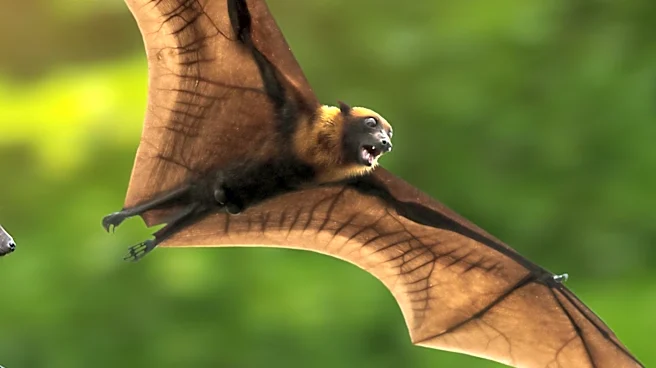
Bats are increasingly recognized for their significant contributions to agriculture, particularly in pest control and pollination. These nocturnal creatures consume large quantities of insects, including many that are harmful to crops such as corn, soybeans,
and fruits. By naturally controlling pest populations, bats help reduce the need for chemical pesticides, offering environmental benefits like protecting waterways and preserving beneficial insects. Additionally, some bat species are vital pollinators for crops like agave, bananas, and mangoes.
Why It's Important?
The ecological services provided by bats are invaluable to agriculture, saving billions of dollars annually in pest control costs. Their role in reducing pesticide use not only benefits the environment but also supports sustainable farming practices. As bats contribute to pollination and seed dispersal, they help maintain biodiversity and ecosystem health. However, bat populations face threats from habitat loss and diseases like white-nose syndrome, highlighting the need for conservation efforts to sustain their beneficial impact on agriculture.
Beyond the Headlines
Bats serve as indicators of environmental health, with their presence often signaling balanced ecosystems. The decline in bat populations can indicate broader ecological issues, necessitating proactive conservation measures. Protecting bat habitats and addressing threats like white-nose syndrome are crucial for maintaining their role in agriculture and ecosystem stability. Public awareness and policy support are essential to ensure the survival of these vital creatures and the continuation of their ecological services.