






What's Happening?
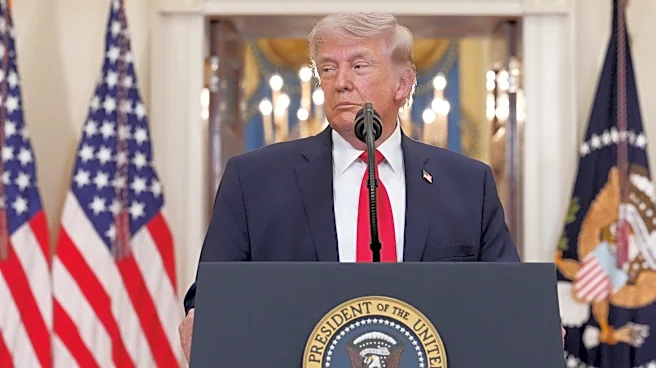
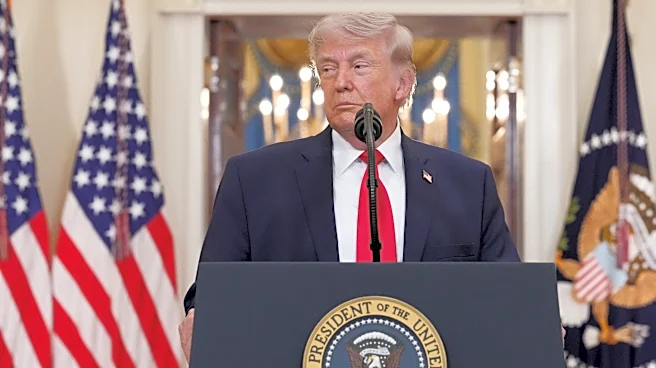
President Trump has signed an executive order aimed at stabilizing college sports by threatening to cut federal funding to schools that do not comply with new regulations. The order, signed just before the women's Final Four, addresses eligibility rules,
transfer policies, and the financial aspects of college sports, which have become increasingly lucrative. The order calls for federal agencies to ensure compliance and suggests that non-compliance could result in the loss of federal grants and funding. This move is part of a broader effort by the Trump administration to influence university policies on various issues, including diversity and inclusion. The order also seeks to establish clear eligibility limits and transfer rules for athletes, proposing a five-year participation window and limiting athletes to one transfer, with an additional transfer allowed after obtaining a four-year degree.
Why It's Important?
The executive order represents a significant intervention in the governance of college sports, which has been a contentious issue due to the increasing commercialization and financial stakes involved. By linking compliance with federal funding, the order could compel universities to adopt changes that align with the administration's vision for college athletics. This could impact the financial stability of institutions that rely heavily on federal grants. The order also highlights ongoing debates about athlete compensation and eligibility, which have been subjects of legal challenges and legislative discussions. The potential for litigation and the need for Congressional action underscore the complexity of reforming college sports governance.
What's Next?
The executive order is likely to lead to legal challenges from athletes and third parties, as it sets up a potential conflict between federal court orders and the executive directive. Universities will need to navigate these legal complexities while considering the financial implications of non-compliance. The order also calls for the Education Department, the Federal Trade Commission, and the attorney general's office to evaluate compliance, which could lead to further regulatory actions. Congressional action may be necessary to solidify the proposed changes, and ongoing bipartisan negotiations could shape the future of college sports governance.