


What's Happening?
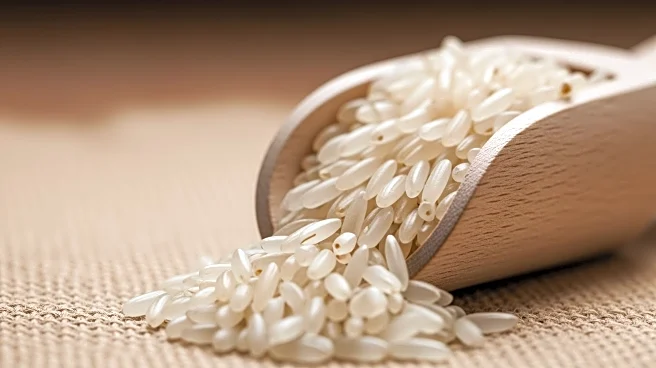
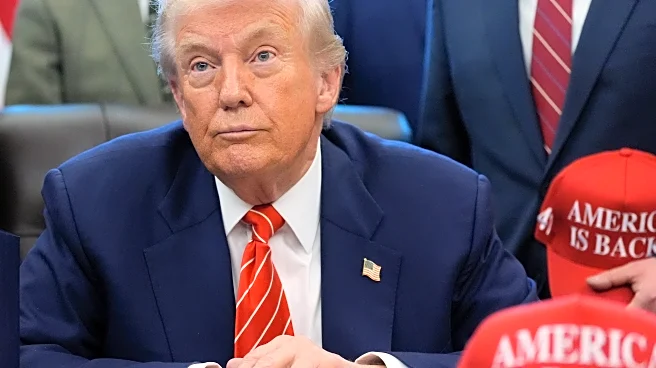
India has rejected accusations from the United States that it is 'dumping' rice into the U.S. market. President Trump recently suggested that additional tariffs could be imposed on Indian rice, claiming that India is exporting rice at prices lower than
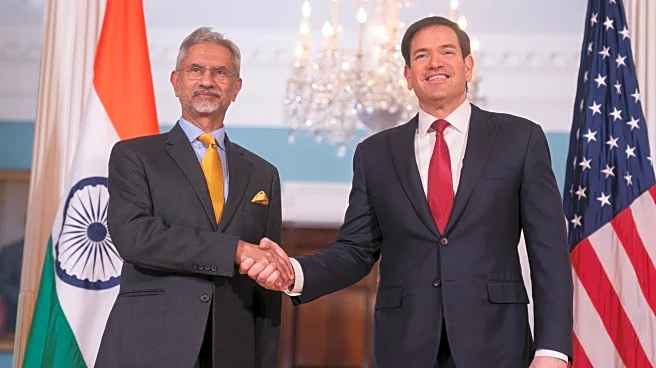
its normal value. Indian trade secretary Rajesh Agrawal refuted these claims, stating that there is no evidence of dumping and that the U.S. has not initiated any anti-dumping investigations. India, the world's largest rice exporter, shipped over 20 million metric tons of rice in the 2024/25 financial year, with a significant portion being premium-grade basmati rice, which typically commands higher prices. The issue was discussed during a meeting between Indian officials and U.S. Deputy Trade Representative Rick Switzer in Delhi.
Why It's Important?
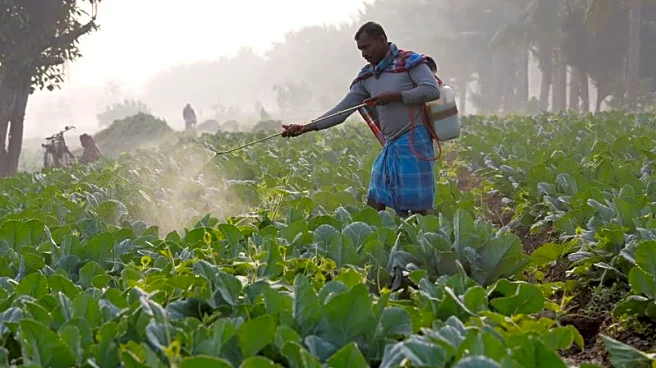
The allegations and potential tariffs could significantly impact U.S.-India trade relations, particularly in the agricultural sector. India is a major exporter of rice, and any tariffs could disrupt its market access to the U.S., affecting Indian farmers and exporters. For the U.S., imposing tariffs could lead to higher prices for consumers and potential retaliation from India, which could affect other sectors. The situation underscores the ongoing trade tensions between the two countries and highlights the complexities of international trade policies under President Trump's administration.
What's Next?
If the U.S. proceeds with imposing tariffs, it could lead to a formal trade dispute between the two nations. India may seek to negotiate or retaliate with its own tariffs on U.S. goods. The outcome of these discussions could influence future trade agreements and set precedents for how similar disputes are handled. Both countries may need to engage in further diplomatic talks to resolve the issue and prevent escalation.