






What's Happening?
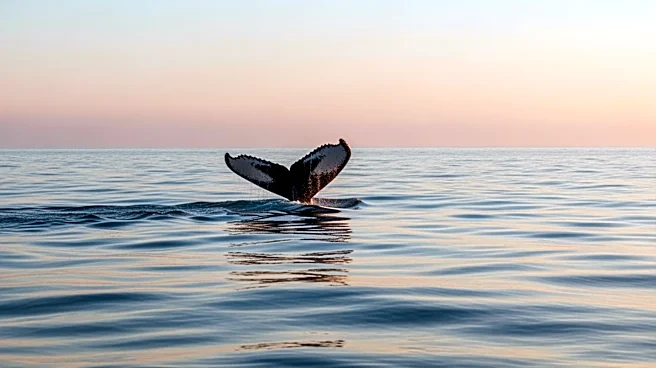
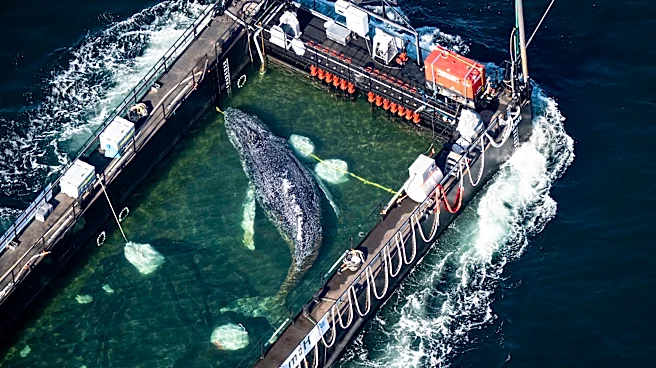
Timmy, a 40-foot-long humpback whale, was successfully released into the North Sea after being stranded in shallow waters near Germany for several weeks. The rescue operation, which was the fifth attempt, was funded by two German millionaires who provided
a water-filled barge to transport the whale to deeper waters. The International Whaling Commission (IWC) has been critical of the rescue efforts, citing the stress imposed on the already ill whale. Despite the successful release, experts warn that Timmy's health may still be compromised, and the IWC emphasizes that the release marks the beginning of the recovery process, not its conclusion. Tagging data from a transmitter attached to Timmy will help monitor his progress and inform future rescue missions.
Why It's Important?
The rescue of Timmy highlights the challenges and ethical considerations involved in wildlife conservation efforts. The operation underscores the significant financial and logistical resources required to save stranded marine animals. It also raises questions about the effectiveness and potential harm of such interventions, as experts caution that the stress of rescue operations can exacerbate the health issues of already compromised animals. The situation draws attention to the broader implications of human intervention in natural habitats and the need for informed strategies in wildlife rescue missions.
What's Next?
The IWC will continue to monitor Timmy's progress through the tagging data, which will provide insights into his health and adaptation to the wild. This data will be crucial in assessing the long-term success of the rescue and may influence future protocols for similar situations. Conservationists and marine biologists will likely use this case to advocate for more comprehensive strategies in dealing with stranded marine life, balancing the need for intervention with the potential risks involved.