




What's Happening?
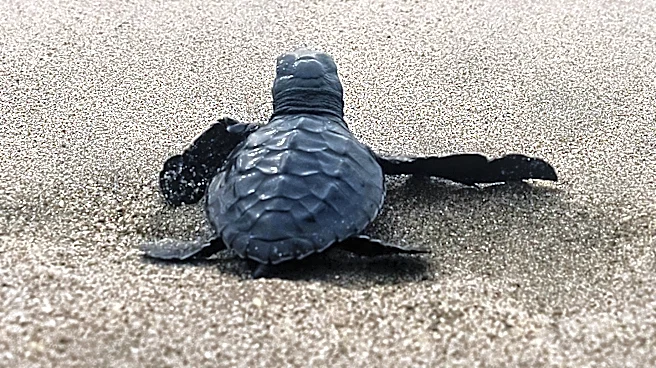
Fifty-four olive ridley sea turtle hatchlings were successfully released into the ocean in Southern California, marking the first documented sea turtle nesting event of its kind on the mainland West Coast of the United States. The hatchlings were from
a nest discovered in Seal Beach, one of two nests found in September (the other in Huntington Beach), totaling 204 eggs. After being incubated for 58 days at the Long Beach Aquarium of the Pacific, the hatchlings emerged and were released in the early morning hours to minimize disturbance. Dr. Lance Adams, the aquarium’s director of veterinary services, confirmed all 54 hatchlings made it to the water. The release was conducted with careful measures, including using red or infrared lighting for imagery and keeping the event private to protect the vulnerable hatchlings during their critical initial hours.
Why It's Important?
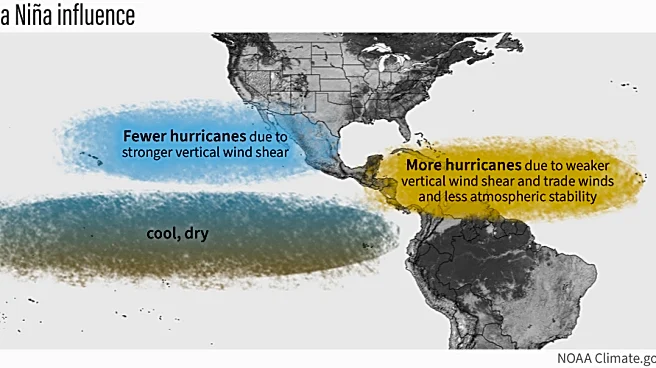
This historic nesting event and successful release are significant for conservation efforts and understanding marine ecosystems. Olive ridley sea turtles, though the most abundant species globally, are still considered endangered. Their nesting in Southern California, far from their typical tropical habitats in the Pacific, Indian, and Atlantic oceans, suggests potential shifts in marine conditions or successful conservation impacts. Jonathan Snyder of the U.S. Fish and Wildlife Service indicated that while warm water from El Niño conditions played a role, decades of conservation work have also contributed to growing olive ridley populations, enabling them to take advantage of unique environmental conditions. This event highlights the resilience of endangered species and the potential for range expansion due to environmental factors and human intervention in conservation.
What's Next?
Approximately 50 eggs remain in the Seal Beach nest, and aquarium staff will monitor them to see if more hatch. Once confident no further turtles will emerge, the nest will be excavated to examine any remaining eggs for development. The Huntington Beach nest had not shown signs of hatching as of the release date. Officials note that olive ridley sea turtles reach maturity around 14 years of age, so it is too early to determine if these hatchlings will eventually return to Southern California beaches to nest. Continued monitoring of ocean temperatures, currents, and prey availability will be crucial to understanding if this nesting event is an isolated incident or a sign of a potential new nesting ground for the species.
Beyond the Headlines
This event raises broader questions about the impact of climate change and ocean warming on marine life distribution. While El Niño conditions are cited as a factor, the long-term implications of sustained warmer waters could lead to more frequent occurrences of tropical species in temperate zones. This could necessitate adjustments in conservation strategies and resource allocation for wildlife management in regions not traditionally accustomed to such species. The successful intervention by the Aquarium of the Pacific and wildlife officials in incubating and releasing the hatchlings also underscores the critical role of zoological institutions and government agencies in responding to unusual wildlife events and supporting species recovery.