








What's Happening?
A recent study has revealed that the herbicide dicamba, widely used in agriculture, can have unintended consequences on certain weedy plants. While dicamba is known for its ability to drift miles from its application site, damaging nearby crops and trees,
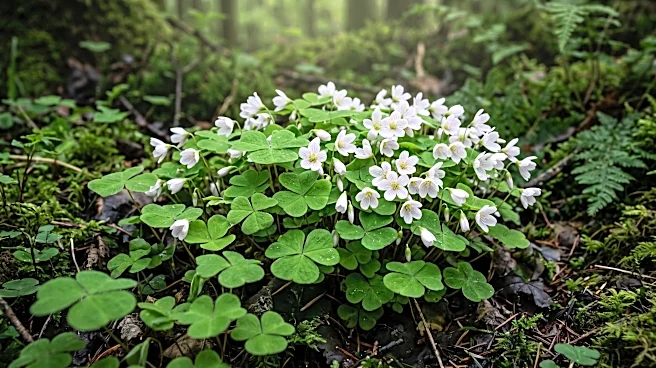
new research from the University of Michigan indicates a peculiar reaction in wood sorrel. When exposed to low doses of dicamba, this common weed produces more, albeit smaller, flowers. This phenomenon, known as a hormetic response, suggests that some plants may react beneficially to low levels of the chemical, rather than simply dying. The study highlights that while the wood sorrel did not become stronger over successive generations, the changes within the plant could alter the surrounding ecosystem, potentially affecting pollinator visitation rates. This finding adds to a growing body of research on dicamba's incremental impact on U.S. ecosystems.
Why It's Important?
The findings regarding dicamba's unintended effects on weeds carry significant implications for U.S. agriculture and environmental policy. The herbicide's tendency to drift and damage non-resistant crops has already been a contentious issue, leading to widespread debate and frustration within the agricultural community. This new research introduces another layer of complexity by demonstrating that even low doses can alter plant behavior, potentially impacting pollinator health and broader ecological interactions. If plants like wood sorrel produce more flowers but attract fewer pollinators, it could disrupt local food webs and biodiversity. This raises questions about the long-term sustainability of current herbicide application practices and the need for more comprehensive ecological impact assessments. The study underscores the challenge of balancing agricultural productivity with environmental protection, affecting farmers, environmental groups, and regulatory bodies.
What's Next?
Further research is needed to fully understand the long-term consequences of dicamba exposure on plant communities and pollinator health. Scientists, including Gina Baucom from the University of Michigan, plan to investigate how plants like wood sorrel react to dicamba after prolonged exposure and its effects on nectar and pollen production for pollinators. Additionally, researchers like Aaron Hager from the University of Illinois Urbana-Champaign suggest exploring additive effects when dicamba interacts with other factors, such as pathogens. Regulatory bodies may face increased pressure to review and potentially revise guidelines for dicamba use, considering these newly identified ecological interactions. The agricultural industry may need to explore alternative weed management strategies or develop more targeted application methods to mitigate unintended environmental impacts, potentially leading to shifts in farming practices and product development.
Beyond the Headlines
The study on dicamba's effects on wood sorrel delves into the intricate and often unforeseen consequences of human intervention in natural systems. It highlights an ethical dimension concerning the responsibility of agricultural practices to not only ensure crop yield but also to preserve ecological balance. The concept of a 'hormetic response,' where a low dose of a toxin can have a beneficial effect, challenges conventional understanding of herbicide impact and underscores the complexity of biological systems. This development could trigger a broader re-evaluation of how agricultural chemicals are tested and regulated, moving beyond immediate toxicity to consider subtle, long-term ecological shifts. It also emphasizes the interconnectedness of ecosystems, where changes in one species due to herbicide exposure can ripple through the entire environment, affecting everything from pollinator populations to overall biodiversity.