



What's Happening?
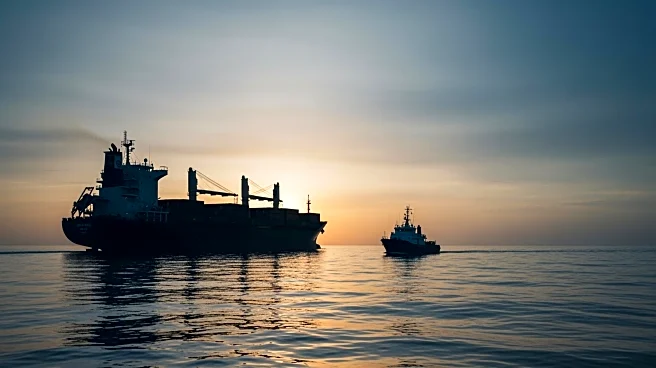
A Spanish rescue ship is escorting the Chariot Tide, a vessel sanctioned by the EU for transporting Russian oil, to Morocco after it broke down in international waters. The ship, part of a 'shadow fleet' used by Russia to evade sanctions, was flying a Mozambique
flag when its engine failed. This fleet consists of aging tankers that pose environmental risks and are linked to Russian-backed operations. The EU and UK have pledged to increase pressure on these vessels, with several already detained by Western forces. The Spanish maritime authority has not clarified why the Chariot Tide was not seized, despite its sanctioned status.
Why It's Important?
The escorting of the Chariot Tide by Spain highlights ongoing challenges in enforcing international sanctions against Russia, particularly in the maritime sector. The use of a shadow fleet to circumvent sanctions poses significant risks, including potential environmental disasters from oil spills. This situation underscores the complexities of international maritime law and the difficulties in policing high seas activities. The incident also reflects broader geopolitical tensions, as Western nations seek to curtail Russia's economic activities linked to its military actions. The effectiveness of sanctions and maritime security measures remains a critical issue for international policymakers.
What's Next?
The incident may prompt further scrutiny and action from international maritime authorities to strengthen enforcement of sanctions against Russia. There could be increased collaboration among EU countries to monitor and intercept shadow fleet vessels. Additionally, the situation may lead to diplomatic discussions on enhancing maritime security and addressing the environmental risks posed by these aging tankers. The ongoing geopolitical tensions between Russia and Western nations are likely to influence future maritime policies and enforcement strategies.