
What's Happening?
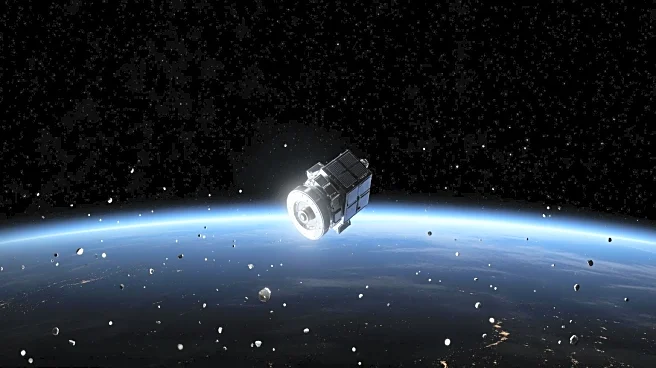
A Starlink satellite experienced an anomaly resulting in an explosion that left trackable debris in orbit. SpaceX reported that the incident was likely caused by an internal energetic source, not a collision.
The satellite remains largely intact and is expected to reenter Earth's atmosphere and disintegrate within weeks. The debris poses no threat to the International Space Station (ISS) as it is on a lower trajectory. This incident follows a recent near-collision between a Starlink satellite and a Chinese satellite, highlighting the need for better coordination among satellite operators.
Why It's Important?
The explosion of a Starlink satellite underscores the growing concerns about space debris and the potential risks it poses to other satellites and space missions. With Starlink's constellation comprising a significant portion of all active satellites, incidents like this highlight the challenges of managing space traffic and ensuring the safety of orbital operations. The event also emphasizes the importance of international cooperation and communication among satellite operators to prevent collisions and manage space debris effectively.
What's Next?
SpaceX is collaborating with NASA and the US Space Force to monitor the debris. The incident may prompt discussions on enhancing regulations and protocols for satellite operations to prevent similar occurrences. As the number of satellites in orbit continues to grow, there may be increased pressure on companies and governments to develop more robust systems for tracking and managing space debris.