
What's Happening?
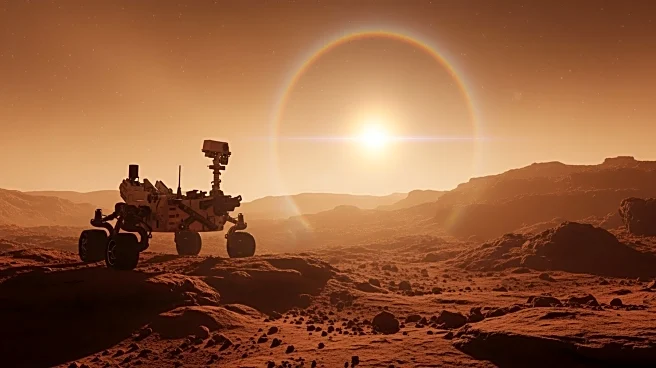
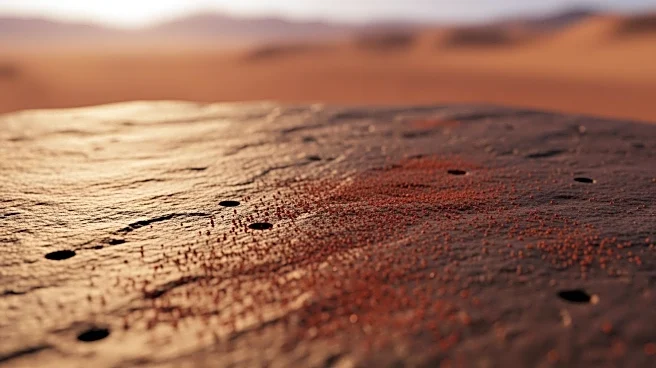
NASA's Curiosity rover has successfully completed its drilling campaign at the Nevado Sajama site on Mars. The rover used its Mars Hand Lens Imager (MAHLI) to capture detailed images of the drill hole,
which was illuminated by LED lights. The campaign involved collecting a 360-degree Mastcam stereo mosaic and delivering the last drilled sample to the Sample Analysis at Mars (SAM) instrument for gas chromatograph/mass spectrometer analysis. This analysis aims to identify any organic materials present in the sample. The rover's activities were strategically planned over several Martian days, or sols, to maximize data collection. The team also conducted nighttime imaging of the drill hole walls, a task not performed recently due to typically poorly consolidated walls. However, the Nevado Sajama drill hole presented a clean wall, prompting the team to capture these images.
Why It's Important?
The completion of the Nevado Sajama drilling campaign is a significant milestone for NASA's Mars exploration efforts. The data collected from the drill site, particularly the analysis of organic materials, could provide insights into the planet's past habitability and geological history. Understanding the presence and composition of organic compounds on Mars is crucial for assessing the potential for past life on the planet. The successful execution of this campaign demonstrates the rover's continued operational capabilities and the effectiveness of remote scientific planning and execution. These findings contribute to the broader goals of the Mars Science Laboratory mission, which seeks to explore and assess Mars' surface environment.
What's Next?
Following the completion of the Nevado Sajama campaign, Curiosity will move to nearby locations to conduct further scientific observations before the holiday season. The science team has identified additional targets of interest that could provide further valuable data. The rover's continued exploration will focus on collecting data that can enhance our understanding of Mars' geological and environmental conditions. Future plans may include more drilling campaigns and the use of other scientific instruments to gather comprehensive data on the Martian surface.