




What's Happening?
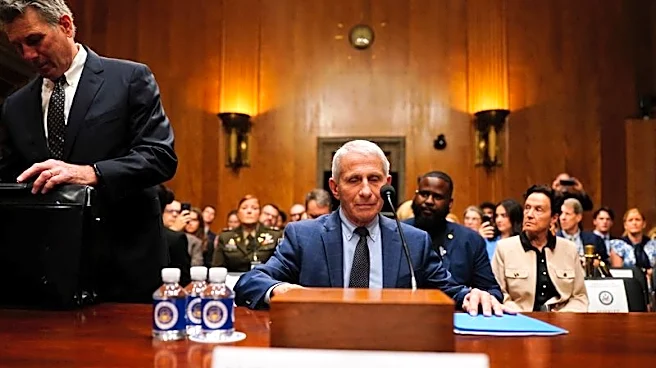
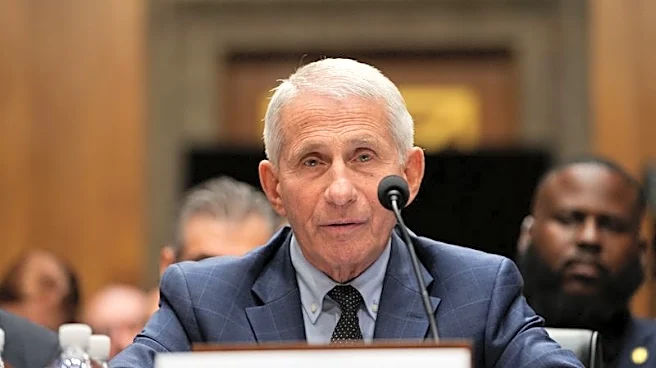
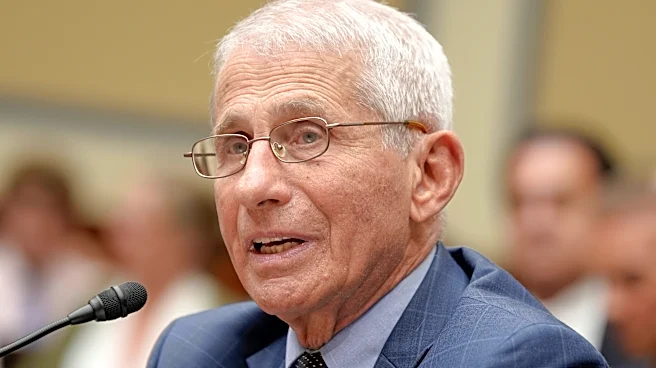
Dr. Anthony Fauci is set to testify before the Senate Homeland Security and Governmental Affairs Committee, chaired by Senator Rand Paul. The hearing will focus on the origins of COVID-19 and Fauci's role in the pandemic response. Paul has accused Fauci of misleading
the public about U.S. funding of research at the Wuhan Institute of Virology. Fauci's diaries, recently released by Paul, document his thoughts during the pandemic and his interactions with political figures. The hearing is expected to be contentious, with potential implications for Fauci's legacy and public health policy.
Why It's Important?
The hearing is significant as it addresses ongoing debates about the origins of COVID-19 and the role of scientific advisors in shaping public health policy. Fauci's testimony could influence public trust in health officials and impact future pandemic preparedness strategies. The hearing also highlights the political tensions surrounding the pandemic response, which could affect legislative actions and public perception of government accountability. The outcome of the hearing may have broader implications for the relationship between science and politics in the U.S.
What's Next?
The hearing could lead to further investigations into the pandemic response and the role of scientific advisors. Depending on the outcome, there may be calls for policy changes or increased oversight of public health agencies. The hearing may also prompt other officials to disclose more information about their experiences during the pandemic, potentially leading to new insights and recommendations for future public health crises.