

What's Happening?
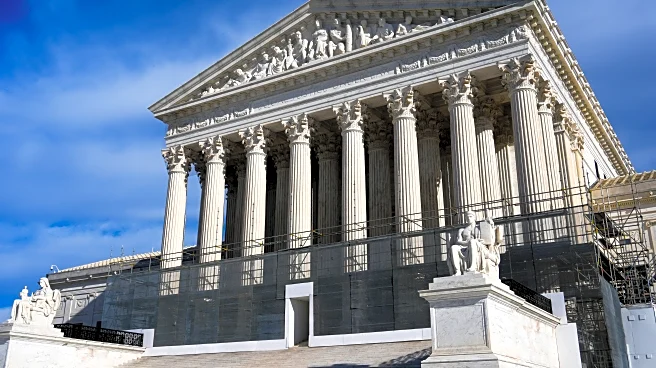
House Speaker Mike Johnson has denied a request for the late Rev. Jesse Jackson to lie in honor in the U.S. Capitol Rotunda. This decision follows the precedent that such honors are typically reserved for former presidents, select officials, and military
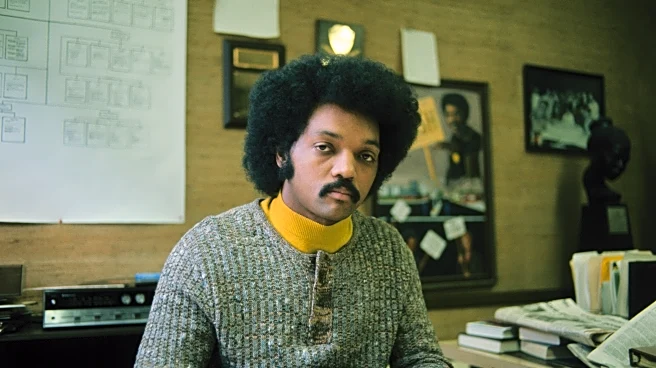
personnel. Rev. Jackson, who passed away at the age of 84, was a prominent figure in the American civil rights movement and ran twice for the Democratic presidential nomination. The request for this honor was made by Jackson's family and some House Democrats, but Johnson's office stated that the decision was not political and aligned with past practices. The Associated Press reported that there is no formal rule for who qualifies to lie in state or in honor, and such ceremonies require the agreement of both the House and the Senate.
Why It's Important?
The denial of this honor to Rev. Jesse Jackson is significant due to his substantial contributions to civil rights and American politics. Jackson's work alongside Dr. Martin Luther King Jr., his efforts in voter registration, and his presidential campaigns have left a lasting impact on American society. The decision not to allow him to lie in honor in the Capitol Rotunda has sparked discussions about the criteria for such honors and the symbolic recognition of civil rights leaders. This decision may influence how future requests for similar honors are evaluated, particularly for individuals who have not held federal office but have significantly shaped the nation's moral and social landscape.
What's Next?
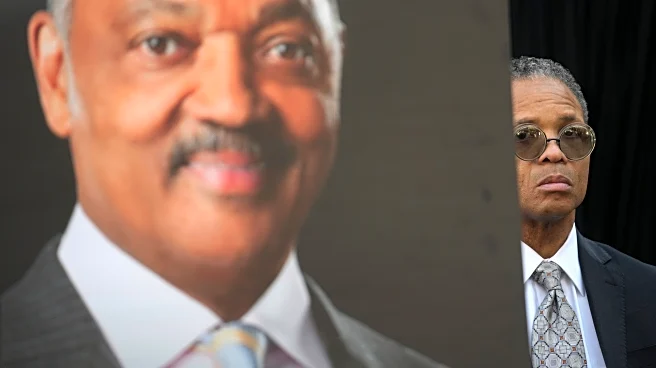
The Jackson family has planned a series of memorial services to honor Rev. Jesse Jackson, beginning next week in Chicago, Washington, D.C., and South Carolina. These services will provide an opportunity for the public to pay their respects. Discussions with lawmakers about hosting commemorations in Jackson's native South Carolina and Washington are ongoing. The final memorial services are scheduled to take place in Chicago on March 6 and 7. These events will likely draw significant attention and participation from civil rights leaders, politicians, and the public, highlighting Jackson's enduring legacy.