



What's Happening?
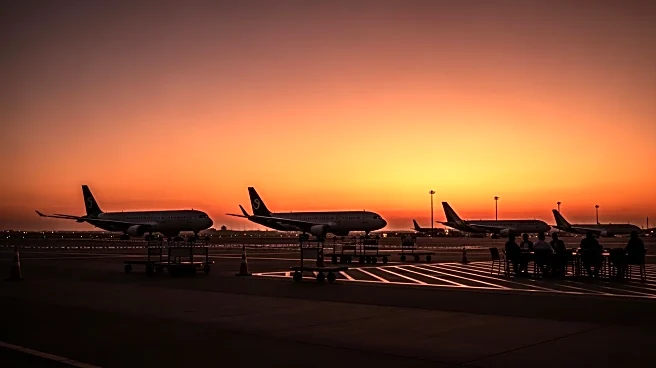
The conflict with Iran has caused widespread aviation chaos in the Middle East, affecting some of the world's busiest airports. Airspace closures have led to a limited number of flights departing the region, stranding thousands of passengers. Governments
are organizing charter flights to evacuate citizens, with the first US-facilitated flight leaving the region. Airlines like Emirates and Qatar Airways are resuming limited repatriation flights, while other carriers continue to reroute or cancel flights near the conflict zone.
Why It's Important?
The airspace closures in the Middle East have significant implications for global travel, affecting airlines, passengers, and international relations. The disruptions highlight the vulnerability of global aviation networks to geopolitical events, impacting travel plans and causing financial losses for airlines and related industries. The situation underscores the importance of international cooperation and contingency planning in managing travel disruptions and ensuring the safety of passengers. The conflict's impact on travel patterns may also influence future aviation policies and strategies.
What's Next?
Governments and airlines are working to facilitate the evacuation of stranded travelers, with ongoing efforts to organize charter flights and adjust schedules. The travel industry is likely to experience continued disruptions, with potential long-term impacts on tourism and business travel. Stakeholders are closely monitoring developments and preparing for further adjustments as the situation evolves. The conflict may also prompt discussions on enhancing aviation security and crisis management strategies.