





What's Happening?
A joint investigation by the Ukrainian Center for Security and Cooperation and Fox News has uncovered an international recruitment network targeting young women from African countries to work at facilities in Russia's Alabuga Special Economic Zone. These
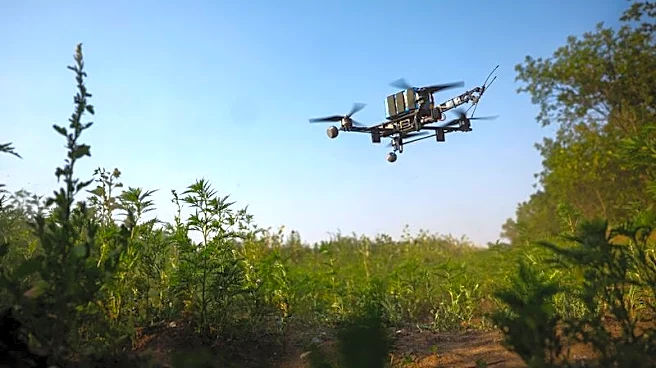
facilities are reportedly involved in the manufacturing of Shahed-type attack drones. Internal documents obtained by investigators detail information on approximately 50 female workers from African nations, ten Russian recruiters, and two African intermediaries. The network operates through Russian cultural and educational organizations, local intermediaries, and Alabuga's own recruitment structures, promoting educational programs and employment opportunities. One key recruitment tool is the 'Alabuga Start' program, which offers paid employment, vocational training, and relocation to Russia. However, some recruited women reportedly end up working in Russia's military-industrial complex, with many failing entrance exams or language requirements, leaving them unable to continue studies or afford return travel.
Why It's Important?
This investigation reveals a concerning aspect of Russia's military-industrial complex and its methods for acquiring labor, which has significant implications for international human rights and global security. For the U.S., this development highlights Russia's efforts to circumvent sanctions and bolster its drone production capabilities, directly impacting the ongoing conflict in Ukraine. The exploitation of vulnerable individuals from African countries, lured under false pretenses, raises serious ethical and legal questions about human trafficking and forced labor. This practice could also strain diplomatic relations between Russia and African nations, potentially affecting U.S. foreign policy and engagement in Africa. The involvement of African women in the production of weapons used in the Ukraine conflict adds another layer of complexity to the international response and the broader humanitarian crisis.
What's Next?
The findings of this investigation are likely to prompt increased international scrutiny and potential sanctions against individuals and entities involved in this recruitment network. The United Kingdom has already imposed sanctions on six individuals and a company for their involvement in the 'Alabuga Start' program. African governments may face pressure to investigate and address these recruitment practices, potentially leading to stricter regulations on foreign employment agencies and increased efforts to protect their citizens. The U.S. and its allies will likely use this information to further expose Russia's tactics and to advocate for stronger international measures to prevent such exploitation. There may also be calls for humanitarian organizations to provide assistance to those who have been recruited under false pretenses and are now stranded in Russia.
Beyond the Headlines
This situation exposes the darker side of economic desperation and the lengths to which state actors will go to support their military objectives. The use of 'educational' and 'employment' programs as a facade for military-industrial labor raises profound ethical questions about corporate responsibility and international oversight. It also underscores the vulnerability of individuals seeking better opportunities, who can easily become victims of deceptive schemes. The long-term implications could include a chilling effect on legitimate international educational and employment programs, as trust is eroded. For the U.S., this development necessitates a multi-faceted approach that combines diplomatic pressure, intelligence sharing, and humanitarian aid to address both the immediate exploitation and the systemic issues that enable such practices. It also highlights the need for robust international legal frameworks to combat human trafficking in the context of armed conflicts.