








What's Happening?
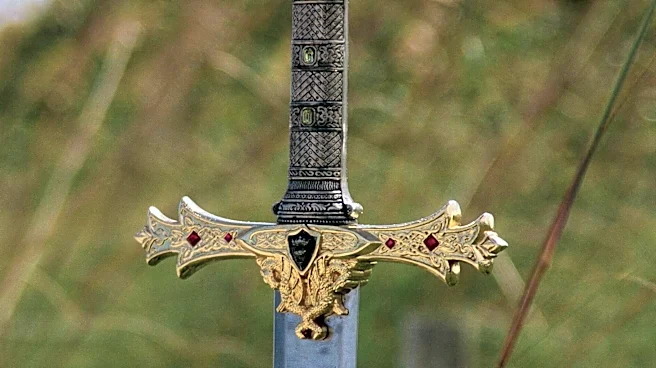
While exploring a forest near Gdańsk, Poland, metal detectorist Marcin Wiśniewski unearthed a two-foot bronze sword estimated to be 2,700 years old. Initially, Wiśniewski's search yielded common items like bottle caps and beer cans, but a distinct signal
led him to the significant discovery. The sword was found perfectly upright in sandy soil, suggesting it was deliberately placed rather than lost or discarded. This ancient weapon would have been highly valuable in its time, comparable to the worth of a herd of cattle, and its placement indicates a ceremonial purpose. The discovery has been described by Wiśniewski as an emotional moment, with tears rolling down his face upon realizing the magnitude of his find.
Why It's Important?
This discovery holds significant archaeological and historical importance, offering a rare glimpse into the ceremonial practices and material culture of ancient societies in the region. The pristine condition and upright placement of the sword provide valuable insights into the rituals and beliefs surrounding such artifacts nearly three millennia ago. For archaeologists, it presents an opportunity to study ancient metallurgy, weapon design, and the social structures that valued such items. The find also underscores the potential for amateur metal detectorists to contribute meaningfully to historical research, provided their activities are conducted responsibly and in cooperation with authorities. The preservation of such an artifact for thousands of years also highlights the unique environmental conditions of the discovery site.
Beyond the Headlines
The discovery of the 2,700-year-old bronze sword transcends a mere archaeological find; it touches upon the ethical considerations surrounding historical artifacts and the role of individual citizens in preserving cultural heritage. The fact that the sword was deliberately placed for ceremonial purposes suggests a rich, complex belief system that valued symbolic offerings. This raises questions about the spiritual and social significance of weapons in ancient cultures, moving beyond their practical use in warfare. Furthermore, the emotional reaction of the metal detectorist highlights the profound human connection to history and the thrill of uncovering tangible links to the past. Such finds often spark public interest in history and archaeology, potentially encouraging greater support for preservation efforts and responsible exploration.