
What's Happening?
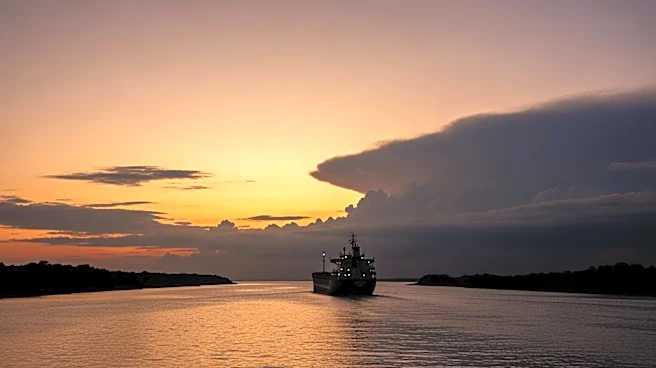
The United States is actively working to restore freedom of navigation in the Strait of Hormuz, a critical international sea passage. This effort comes amid rising tensions with Iran, which has closed
the strait, affecting global trade and economic stability. The U.S. Navy has begun operations to clear mines laid by Iran's Revolutionary Guards, with additional forces and underwater drones joining the effort. The situation is being closely watched by global powers, including China, as the U.S. seeks to maintain its naval reputation and influence in the region.
Why It's Important?
The Strait of Hormuz is a vital trade corridor that supports regional and global economic prosperity. Its closure has significant implications for international energy shipments and the global economy. The U.S.'s ability to reopen the strait is crucial for maintaining its status as a global superpower and ensuring the free flow of commerce. Failure to do so could weaken the U.S.'s position on the global stage and embolden rival powers like China. The situation also highlights the strategic importance of naval power in international relations and the challenges of maintaining security in volatile regions.
What's Next?
The U.S. is expected to continue its efforts to clear the Strait of Hormuz and establish a safe passage for maritime traffic. The success of these operations will be critical in determining the U.S.'s ability to uphold international norms and maintain its influence in the Middle East. The ongoing negotiations with Iran may also impact the situation, as both countries seek to resolve the conflict and address broader geopolitical concerns. The outcome of these efforts will have significant implications for regional stability and global economic dynamics.
Beyond the Headlines
The situation in the Strait of Hormuz reflects broader geopolitical shifts and the challenges of maintaining international order in a multipolar world. The rise of China and regional groups like the Houthis and Iran pose significant challenges to U.S. influence and its ability to project power globally. The conflict underscores the importance of alliances and strategic partnerships in creating asymmetric advantages and deterring rival powers. The evolving geopolitical landscape may require a reevaluation of existing security frameworks and a renewed focus on multilateral cooperation.