
What's Happening?
The Lieber Institute at West Point has published an analysis examining the customary law of naval blockade and its application in contemporary conflicts, including the Gaza Strip. The article asserts that
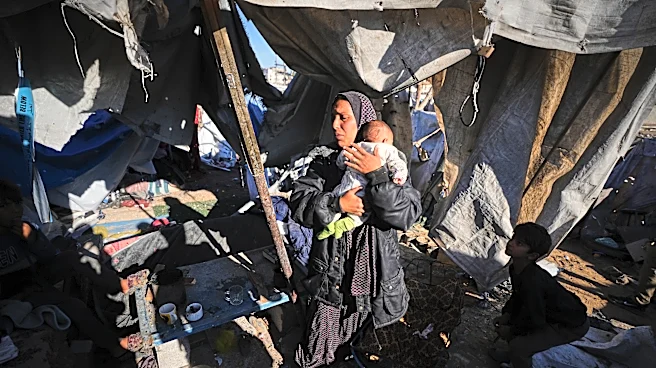
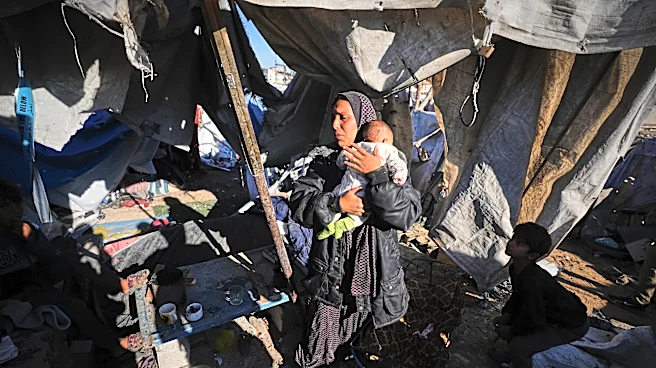
the fundamental principles of blockade law, established in the 19th and early 20th centuries, remain largely unchanged despite modern humanitarian concerns. It highlights that naval blockades continue to be viewed by states as a significant method of warfare. The analysis uses three case studies: Russian and Ukrainian operations in the Black Sea, Israel's naval blockade of the Gaza Strip, and the U.S. Navy's blockade of Iran. Regarding Gaza, the institute notes that from a traditional blockade law perspective, Israel's operation satisfies requirements of declaration, notification, and effectiveness, and is directed against a territory from which hostilities are conducted. However, it also acknowledges that the Gaza blockade raises fundamental questions about its compatibility with international humanitarian law, particularly concerning civilian protection and humanitarian relief, with critics arguing its effects constitute collective punishment or starvation.
Why It's Important?
This analysis from a prominent U.S. military academic institution is important because it provides a legal framework for understanding naval blockades in modern warfare, a topic with significant implications for international law and humanitarian aid. By affirming the continuity of customary blockade law while acknowledging the complexities introduced by contemporary international humanitarian law, the institute contributes to an ongoing debate that affects U.S. foreign policy and military operations. The discussion around Gaza specifically highlights the tension between a state's right to impose a blockade for security reasons and its obligations to protect civilian populations. This legal interpretation can influence how the U.S. and its allies conduct or respond to blockades, potentially shaping future military doctrines and diplomatic engagements related to maritime security and humanitarian access in conflict zones. The institute's perspective underscores the need for a nuanced understanding of international law in an evolving global security landscape.
What's Next?
The ongoing legal debate surrounding naval blockades, as highlighted by the Lieber Institute, will likely continue to influence international legal interpretations and state practices. Future military operations involving blockades will face increased scrutiny regarding their adherence to both traditional blockade law and contemporary international humanitarian law. This could lead to further development or clarification of these laws through international courts, diplomatic negotiations, or the practices of states. For the U.S., this analysis may inform policy decisions regarding its own naval operations and its responses to blockades imposed by other nations. Humanitarian organizations will likely continue to advocate for stricter interpretations of humanitarian law in the context of blockades, pushing for greater protections for civilian populations and unimpeded access for aid. The interplay between security imperatives and humanitarian obligations will remain a critical point of contention in future conflicts.
Beyond the Headlines
The Lieber Institute's analysis delves into the deeper implications of how ancient laws of warfare adapt to modern ethical and technological landscapes. The tension between the traditional right of blockade and evolving humanitarian norms reflects a broader challenge in international law: how to reconcile state sovereignty and security with universal human rights. The Gaza case study, in particular, exposes the ethical quandary of applying military strategies that, while legally permissible under one framework, may have severe humanitarian consequences under another. This highlights the need for continuous re-evaluation of legal frameworks in light of changing global values and the devastating impact of conflict on civilians. The discussion also implicitly touches upon the role of technology in warfare, as modern surveillance and interdiction capabilities reshape how blockades are enforced and their effectiveness assessed, further complicating the legal and ethical considerations.