


What's Happening?
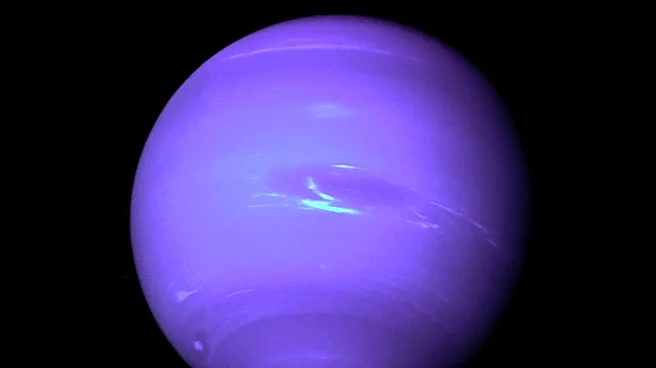
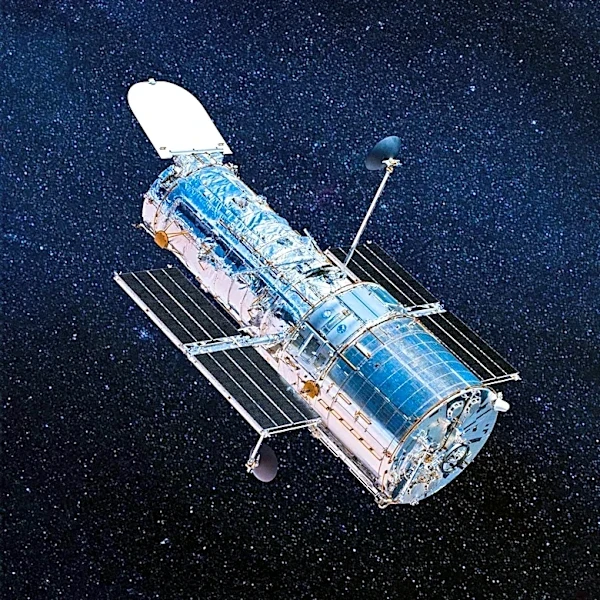
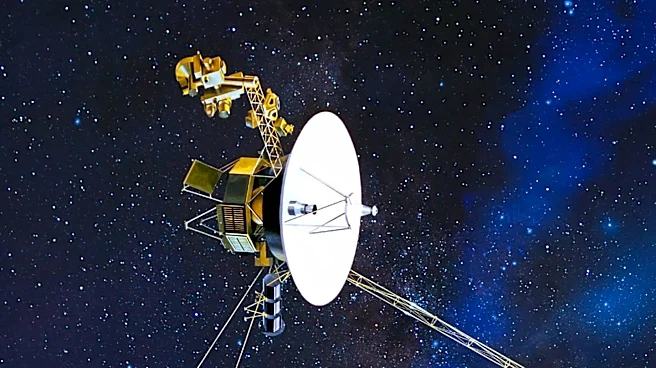
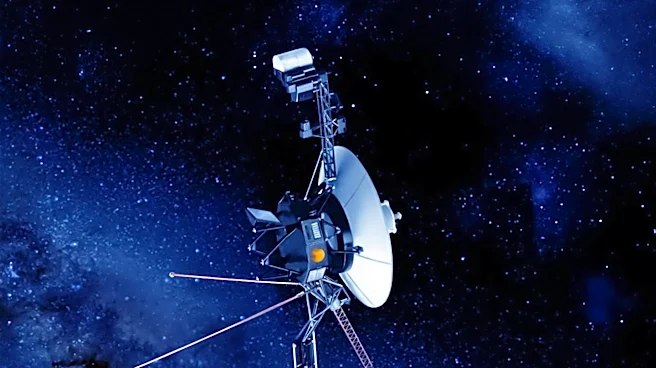
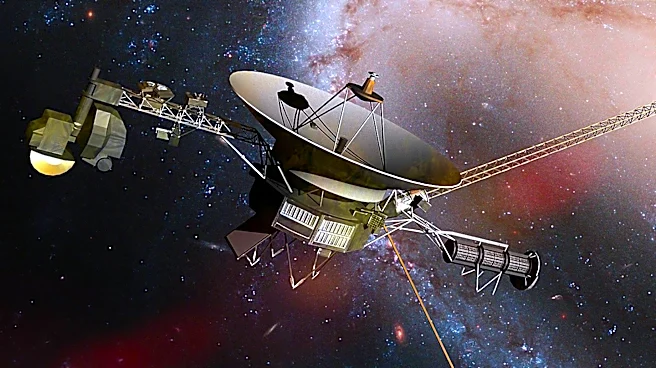
In 1989, NASA's Voyager 2 spacecraft observed a massive storm on Neptune, known as the Great Dark Spot, with winds reaching 2,100 kilometers per hour. By 1994, when the Hubble Space Telescope revisited Neptune, the storm had vanished, unlike Jupiter's
Great Red Spot, which has persisted for over a century. Since then, Hubble has detected several more dark spots on Neptune, each with a lifespan of one to six years. These storms form in regions of high atmospheric pressure and are eroded by Neptune's turbulent atmosphere, driven by internal heat and fast jet streams. Researchers have identified bright methane ice clouds as early indicators of new storm formations.
Why It's Important?
The study of Neptune's transient storms provides valuable insights into the planet's atmospheric dynamics and weather patterns. Understanding why these storms dissipate quickly compared to Jupiter's long-lasting Great Red Spot can reveal differences in planetary atmospheres and the forces shaping them. This knowledge contributes to our broader understanding of planetary science and the behavior of gas giants in our solar system. The findings also highlight the importance of continuous observation and monitoring of distant planets to capture dynamic changes and improve our models of planetary atmospheres.