









What's Happening?
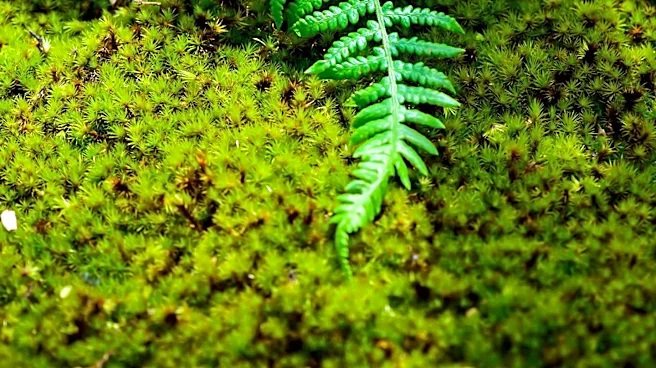
Researchers have made a significant breakthrough in understanding the biology of Salvinia molesta, a fast-spreading invasive fern that poses a threat to freshwater ecosystems. The fern, which can double its biomass every 36 hours, has been a challenge
to control due to its rapid expansion. By examining its genome, researchers discovered that the fern is a diploid hybrid, not an allopentaploid as previously thought. This misclassification had hindered efforts to understand its reproductive success. The fern reproduces clonally, with pieces breaking away to form new plants, making it difficult to manage.
Why It's Important?
The discovery is crucial for environmental management as it provides insights into controlling one of the world's most invasive species. Salvinia molesta disrupts ecosystems by forming thick mats on water surfaces, blocking sunlight, and reducing oxygen levels, which can harm aquatic life and degrade water quality. Understanding its genetic makeup allows for more targeted and effective control measures. Since the fern reproduces clonally, successful treatments in one area could be applied elsewhere, potentially reducing the time and cost of managing affected water bodies.
What's Next?
With this new understanding, environmental managers can develop more effective strategies to control Salvinia molesta. The research suggests that treatments effective in one location may work in others, streamlining efforts to restore affected ecosystems. This could lead to the development of new management protocols and the allocation of resources towards implementing these strategies. Continued research will likely focus on refining these methods and exploring additional ways to mitigate the fern's impact on freshwater habitats.