








What's Happening?
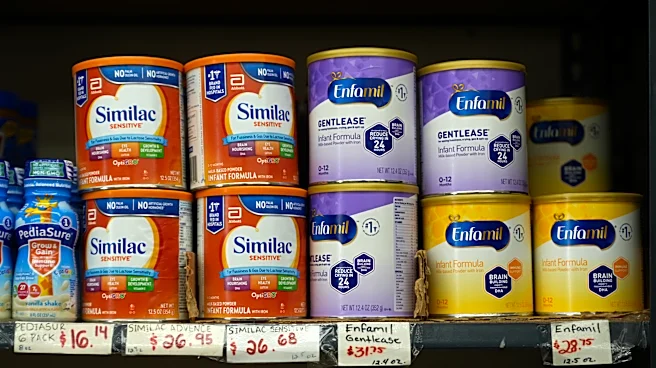
A recent investigation by Consumer Reports has revealed that more than half of the baby formulas sold in the United States contain concerning levels of arsenic and lead. The study tested 49 different formulas, including powdered, liquid, alternative protein-based,
and hypoallergenic products. Of these, 26 were found to contain inorganic arsenic at or above the threshold set by Consumer Reports, while three powdered formulas exceeded the level of concern for lead. The presence of PFAS, synthetic compounds known as 'forever chemicals,' was also detected in over a quarter of the products. Despite these findings, Consumer Reports assured that all tested formulas remain safe for use, as none contained contaminant levels high enough to cause immediate harm. The report has intensified calls for federal limits on heavy metals in infant formula, a move that has been stalled for some time.
Why It's Important?
The findings of this investigation are significant as they highlight potential health risks for infants, who are particularly vulnerable to contaminants due to their developing organ systems. The presence of heavy metals in baby formulas, which are among the most regulated food products in the U.S., raises concerns about the adequacy of current safety standards. This issue has prompted legislative action, with Senator Gary Peters introducing the Protect Infant Formula from Contamination Act, which aims to enhance regulatory oversight. The act has already passed the Senate Health, Education, Labor and Pensions Committee. The investigation underscores the need for stricter regulations and better consumer information to ensure the safety of infant nutrition products.
What's Next?
As the investigation gains attention, there may be increased pressure on regulatory bodies like the FDA to establish enforceable limits on heavy metals in baby formulas. The proposed legislation, if enacted, would require manufacturers to promptly report any contamination to the FDA, potentially leading to more stringent oversight and quicker responses to safety concerns. In the meantime, Consumer Reports advises parents to consult with pediatricians regarding formula choices and to use only clean water when preparing powdered formulas. The ongoing dialogue may also encourage manufacturers to adopt more rigorous testing and quality control measures to meet both U.S. and international safety standards.