





What's Happening?
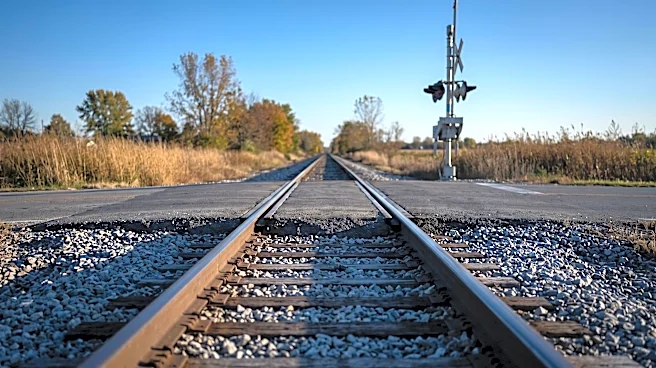
A national rail safety campaign, 'See Tracks, Think Train,' has been launched in De Pere, Wisconsin, to raise awareness about the dangers of railroad tracks. This initiative comes as Wisconsin has recorded four rail deaths and 37 collisions as of August
this year. According to the National Safety Council, a person or vehicle is involved in a preventable train collision every three hours in America. Special Agent Christopher Wendorf from the Canadian National Railway Police Department emphasized that trains always have the right of way and warned against crossing tracks when a train is stopped or attempting to board a train in unauthorized areas. Another special agent, Russ Kollmansberger, highlighted that rail fatalities are more common than people realize, stating that individuals are 20 times more likely to die in a crash with a train than with another motor vehicle. The campaign aims to educate the public on staying alert near railroad crossings, especially since some local ordinances allow train horns to be silenced in non-emergency situations.
Why It's Important?
The 'See Tracks, Think Train' campaign is crucial for public safety, particularly in states like Wisconsin, which has seen a concerning number of rail-related incidents. The statistics—four deaths and 37 collisions by August—underscore a significant public health and safety issue. The campaign's focus on educating the public about the inherent dangers and legal requirements around train tracks can directly reduce preventable accidents, saving lives and preventing injuries. The emphasis on awareness is particularly vital given the statistic that one is 20 times more likely to die in a train collision than in a motor vehicle accident. This initiative also highlights the responsibilities of individuals to observe warning signs and signals at crossings, especially when train horns may not be used due to local ordinances. By promoting vigilance, the campaign seeks to mitigate the human and economic costs associated with rail incidents, which include emergency response, medical care, and infrastructure damage.
What's Next?
The 'See Tracks, Think Train' campaign is expected to continue its educational efforts across Wisconsin and potentially other states, with the goal of significantly reducing rail-related fatalities and collisions. Special Agent Christopher Wendorf expressed hope that the numbers for fatalities in Wisconsin could be brought down to zero. Future steps will likely involve ongoing public outreach, community engagement, and collaboration with local authorities to reinforce rail safety messages. The campaign will continue to stress the importance of recognizing advanced warning signs, looking for lights and gates, and understanding that trains always have the right of way. Continued monitoring of incident statistics will be essential to assess the effectiveness of the campaign and adapt strategies as needed to enhance public safety around railroad properties.
Beyond the Headlines
Beyond the immediate safety concerns, the 'See Tracks, Think Train' campaign touches upon broader societal issues related to infrastructure safety, public education, and the challenges of coexisting with industrial transportation networks. The campaign implicitly addresses the psychological aspect of human behavior around large machinery, where familiarity can sometimes lead to complacency. The fact that some local ordinances silence train horns in non-emergency situations highlights a complex balance between community noise concerns and safety warnings, placing a greater onus on individual vigilance. This initiative also underscores the ongoing need for robust public awareness campaigns in areas where critical infrastructure intersects with daily life, prompting a re-evaluation of how communities are educated about and protected from potential hazards that are often overlooked until a tragedy occurs. It also points to the continuous effort required by railway police and safety organizations to adapt their strategies to evolving community landscapes and behaviors.