



What's Happening?
The United States is at significant risk of losing its global leadership to China in advanced, traded-sector industries, which are crucial for 21st-century economic strength and national security. This concern was a central theme at the National Techno-Economic
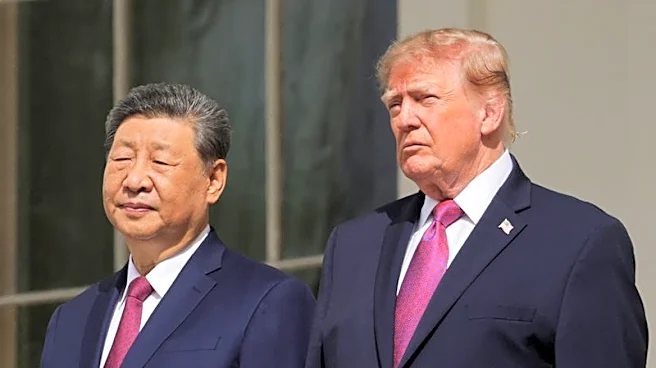
Power Conference hosted by the Information Technology and Innovation Foundation (ITIF). Experts at the conference characterized China's coordinated long-term campaign to dominate these industries as a 'techno-economic-trade war,' designed to place the U.S. and Western nations in a subservient position. China is rapidly becoming a leading innovator in cutting-edge fields like robotics and AI, posing an existential threat to U.S. technological leadership and power.
Why It's Important?
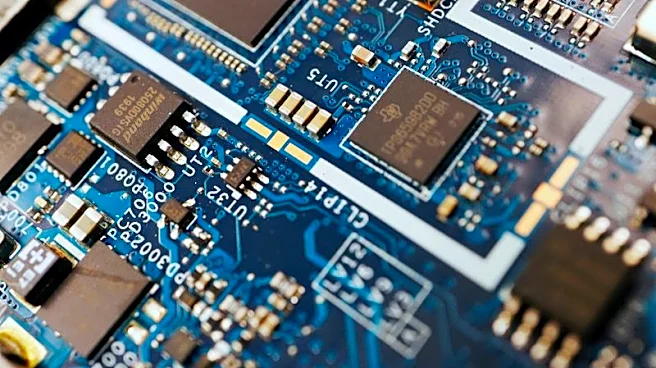
The potential loss of U.S. leadership in critical advanced industries has profound implications for national security and economic prosperity. China's aggressive pursuit of dominance in sectors ranging from computers and electronics to AI and quantum computing directly challenges the U.S.'s long-held technological superiority. This competition is not merely economic; it is a strategic struggle that could reshape global power dynamics. For the U.S., failing to respond effectively could lead to a decline in innovation, a weakening of its industrial base, and increased reliance on foreign technologies, ultimately impacting its ability to defend its interests and maintain its global standing. The conference emphasized that fundamental policy changes are required to avoid this outcome.
What's Next?
To counter China's techno-economic challenge, U.S. policymakers are urged to jettison outdated trade policy doctrines and adopt a new 'national power industry strategy.' This strategy would involve a whole-of-government approach to techno-economic defense, potentially including a central role for the War Department and the establishment of new agencies like a National Advanced Industry and Technology Agency (NAITA). Furthermore, there's a call for a shift from traditional financial capitalism to 'national power capitalism,' which would align shareholder interests with national interests through tax reforms and incentives for long-term investment. The conference also highlighted the need for strategic trade partnerships and structural fixes for U.S. science and innovation funding to ensure the U.S. can compete effectively.
Beyond the Headlines
The discussion at the ITIF conference delves into the deeper philosophical and structural challenges facing the U.S. in its competition with China. It suggests that the U.S.'s traditional free-market approach and emphasis on shareholder profits may be ill-suited to counter China's state-led, goal-oriented system. The concept of 'national power capitalism' implies a significant reorientation of economic policy, potentially involving greater government intervention and a redefinition of corporate responsibility to include national strategic objectives. This shift could trigger debates about the balance between free markets and state planning, and the extent to which the U.S. should adopt industrial policies to protect its technological future, moving beyond the 'Overton window' of acceptable policy discourse.