

What's Happening?
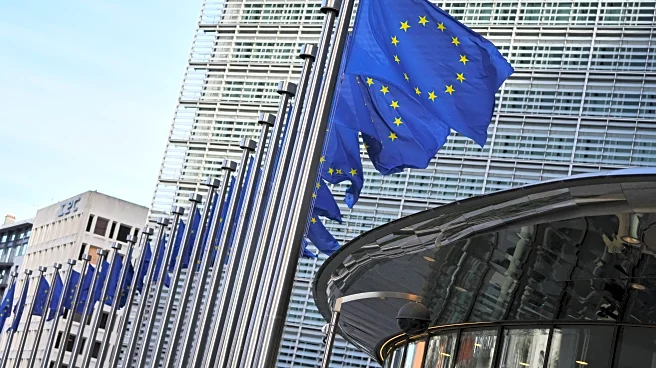
The European Commission is making efforts to secure approval for the long-negotiated Mercosur trade deal by proposing farm funding concessions. The deal, which has been in the works for over 25 years, aims to create a free-trade area with Mercosur countries—Argentina,
Brazil, Paraguay, and Uruguay—abolishing duties on 90% of EU exports. The Commission is seeking a qualified majority vote from EU member states, requiring support from 15 out of 27 countries representing 65% of the population. Italy's support is crucial due to its large population. The Commission is considering offering financial reassurances to European farmers to mitigate the impact of a proposed reduction in the Common Agricultural Policy. This move is seen as critical to gaining Italy's backing, which is pivotal for the deal's passage.
Why It's Important?
The approval of the Mercosur deal holds significant implications for international trade and the agricultural sector within the EU. If passed, it would establish one of the largest free-trade areas, impacting over 700 million people. The deal is expected to boost EU exports by eliminating tariffs, potentially benefiting various industries. However, it also raises concerns among European farmers about increased competition from Mercosur countries, which could affect local agricultural markets. The proposed concessions aim to address these concerns by providing financial support to farmers, thereby balancing trade benefits with domestic agricultural interests. The outcome of this deal could set a precedent for future trade negotiations and influence EU's trade policy direction.
What's Next?
A decisive vote on the Mercosur deal is scheduled for Friday, with EU farm ministers meeting in Brussels to discuss the proposal. If the deal is approved, European Commission President Ursula von der Leyen is expected to travel to Paraguay to sign the agreement. The Commission's ability to secure Italy's support through financial reassurances will be crucial. Should the deal pass, it will likely lead to increased trade activities between the EU and Mercosur countries, necessitating adjustments in agricultural policies and market strategies within the EU. The response from major EU member states, particularly France and Poland, who have expressed opposition, will also be pivotal in shaping the deal's implementation.