






What's Happening?
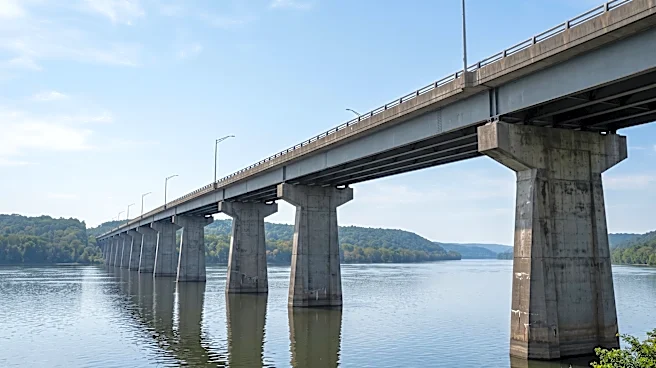
The Pennsylvania Department of Transportation (PennDOT) is evaluating a rehabilitation project for the Norman Wood Bridge, which connects York and Lancaster Counties across the Susquehanna River. PennDOT held a meeting to discuss the proposed project,
with cost estimates ranging from $50 million to $400 million. Some of the proposed options for rehabilitation could necessitate an extended closure of the bridge. The Norman Wood Bridge, originally constructed in 1968, spans 3,510 feet and serves approximately 5,500 vehicles daily. PennDOT has stated that solutions are required to address the ongoing degradation of the bridge's structural components and to improve traffic operational concerns to maintain safe travel for the public. The agency is currently studying the transformational needs in the area and assessing various options to enhance travel and safety.
Why It's Important?
The Norman Wood Bridge is a critical transportation link in lower south-central Pennsylvania, serving as the southernmost crossing of the Susquehanna River in the state. Its rehabilitation is vital for regional mobility, as the nearest alternative crossings are 14 miles south and over 20 miles north. An extended closure, depending on the chosen rehabilitation option, could significantly disrupt daily commutes and commercial traffic between York and Lancaster Counties, impacting local businesses and residents. The project's substantial cost, ranging from $50 million to $400 million, highlights the significant investment required to maintain aging infrastructure and ensures public safety. This decision will have direct implications for state budgets, local economies, and the daily lives of thousands of commuters and businesses reliant on this crucial artery.
What's Next?
PennDOT is currently studying the transformational needs in the area and evaluating different options for the Norman Wood Bridge rehabilitation project. The agency will need to determine the most feasible and cost-effective solution that addresses the structural degradation and traffic operational concerns while minimizing disruption. Given that the rehabilitation of the Columbia Wrightsville Bridge is reportedly scheduled for Spring 2028, there is a potential for future detours between York and Lancaster Counties. PennDOT will likely conduct further public outreach and environmental assessments before finalizing a plan and securing funding. The decision will involve balancing the need for extensive repairs with the impact of potential bridge closures on the community and regional transportation network.
Beyond the Headlines
The Norman Wood Bridge project is emblematic of a broader national challenge concerning aging infrastructure. Across the U.S., many bridges and roads are nearing or have exceeded their designed lifespans, requiring significant investment for repair or replacement. This situation raises critical questions about long-term infrastructure funding, the economic impact of deferred maintenance, and the resilience of transportation networks. The potential for extended closures underscores the vulnerability of communities reliant on single points of access and the need for comprehensive planning that includes alternative routes and public communication strategies. Furthermore, the project's cost range highlights the complexities of infrastructure development, involving engineering challenges, material costs, labor, and environmental considerations, all of which contribute to the substantial financial burden on taxpayers and government budgets.