





What's Happening?
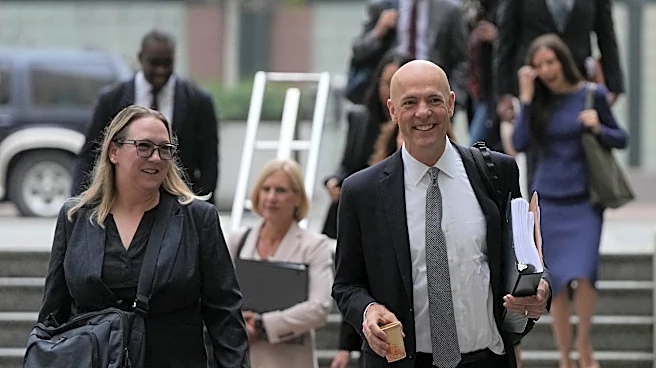
Meta Platforms is currently on trial in federal court in Oakland, California, facing accusations from a coalition of 29 states. The lawsuit alleges that Meta deliberately designed Facebook and Instagram with features like infinite scroll, autoplay, and recommendation
algorithms to keep young users engaged for as long as possible, effectively addicting children. Furthermore, the states claim that Meta knowingly allowed children under 13 to use its platforms and collected their personal data without parental consent, which violates the Children's Online Privacy Protection Act. The trial, presided over by U.S. District Judge Yvonne Gonzalez Rogers, involves four states initially: California, Colorado, Kentucky, and New Jersey, with proceedings for the remaining states expected later. The states are seeking up to $1.4 trillion in penalties and significant changes to how Facebook and Instagram operate. Meta has denied these allegations, stating that the attorneys general offer no proof of users being misled and are attempting to penalize the company for industry-wide challenges like age verification. Jury selection for the trial began after Meta's attempt to postpone it was rejected by the 9th U.S. Circuit Court of Appeals. Judge Gonzalez Rogers has opted for an advisory jury, an uncommon procedural approach where jurors provide opinions on specific questions to inform the judge's ultimate ruling.
Why It's Important?
This trial holds significant importance as it challenges the fundamental business model of major social media platforms and their impact on youth. A ruling against Meta could set a precedent for how social media companies design their products, potentially leading to stricter regulations on features that promote prolonged engagement, especially among minors. The requested penalties, though unlikely to reach the full $1.4 trillion, highlight the severity of the alleged violations and could result in substantial financial repercussions for Meta. Beyond financial penalties, the demand for changes such as age restrictions, the elimination of infinite scroll, and alterations to content recommendation algorithms could fundamentally reshape the user experience on platforms like Facebook and Instagram. This case reflects a growing societal concern regarding the mental health and privacy of young people online, and its outcome could influence future legislative efforts and corporate responsibilities in the digital space. It also underscores the ongoing tension between technological innovation and ethical considerations, particularly when vulnerable populations are involved.
What's Next?
The trial is expected to last approximately six weeks. During this period, Meta CEO Mark Zuckerberg and Instagram chief Adam Mosseri are both anticipated to testify. The advisory jury will deliver opinions on specific questions, which will then inform U.S. District Judge Yvonne Gonzalez Rogers' ultimate ruling. The states are pushing for court orders that would mandate age restrictions, eliminate the 'infinite scroll' feature, and modify content recommendation algorithms to prioritize user well-being over engagement. Should the court rule in favor of the states, Meta could face substantial penalties and be compelled to implement significant changes to its platforms. Conversely, a ruling in Meta's favor would affirm its current operational practices, though public and regulatory scrutiny would likely persist. Regardless of the immediate outcome, this trial is expected to fuel ongoing discussions and potential legislative actions regarding social media's impact on children and data privacy.
Beyond the Headlines
The trial against Meta delves into profound ethical and legal questions surrounding corporate responsibility in the digital age. It highlights the tension between profit-driven design and the well-being of users, particularly minors. The concept of 'addiction by design' raises questions about the intentionality behind platform features and whether companies should be held liable for the psychological effects of their products. Legally, the case tests the boundaries of the Children's Online Privacy Protection Act (COPPA) and could redefine how online platforms are expected to protect children's data and online experience. Culturally, it reflects a growing public and governmental skepticism towards the unchecked power of tech giants and their influence on societal norms and individual development. The outcome could trigger a broader re-evaluation of digital ethics, potentially leading to new industry standards for user interface design, content moderation, and age verification across the entire social media landscape. This could usher in an era where user safety and mental health are given greater priority in technological development.