

What's Happening?
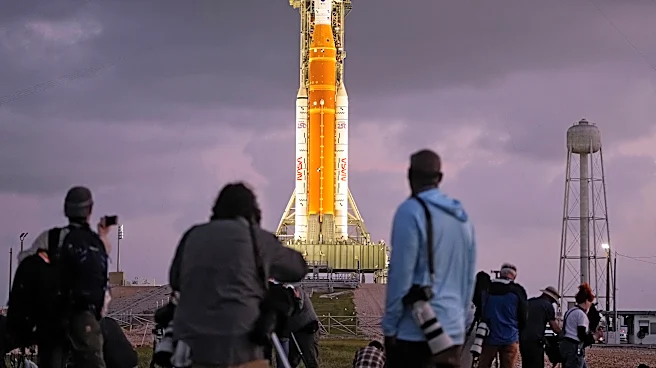
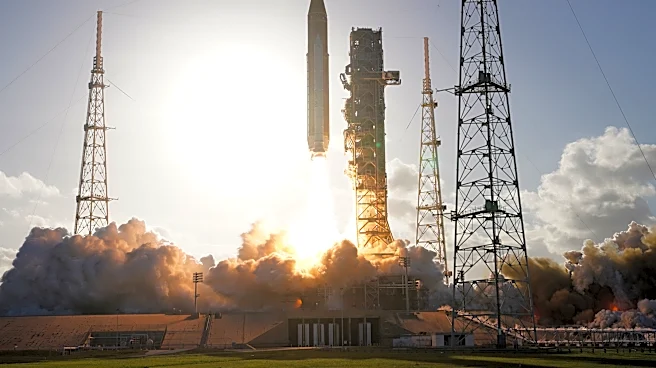
NASA is preparing to launch the Artemis II mission, marking the first crewed flight in the Artemis moon program. Scheduled to lift off from the Kennedy Space Center in Florida, the mission will send four astronauts on a journey around the moon and back.
This follows the uncrewed Artemis I test flight in 2022, which successfully sent an empty Orion capsule on a three-week mission around the moon. The Artemis II mission will involve the astronauts first orbiting Earth to test key systems on the spacecraft before embarking on a figure-eight trajectory around the moon. The entire mission is expected to last just under 10 days. The launch is set for as early as 6:24 p.m., with a high probability of favorable weather conditions, according to Mark Burger, launch weather officer with the Space Force's 45th Weather Squadron.
Why It's Important?
The Artemis II mission is a significant milestone in NASA's efforts to return humans to the moon and establish a sustainable presence there. This mission is crucial for testing the systems and capabilities needed for future lunar exploration, including the eventual goal of building a moon base. The success of Artemis II will pave the way for subsequent missions that aim to land astronauts on the lunar surface and explore the moon's resources. This initiative is part of a broader international collaboration to advance space exploration and scientific research, potentially leading to new technological advancements and economic opportunities.
What's Next?
Following the successful completion of Artemis II, NASA plans to proceed with Artemis III, which aims to land astronauts on the lunar surface. This mission will be a critical step toward establishing a permanent human presence on the moon. NASA is also working with international partners to develop the necessary infrastructure for sustained lunar exploration, including habitats and research facilities. The outcomes of these missions will inform future strategies for human exploration of Mars and beyond.