









What's Happening?
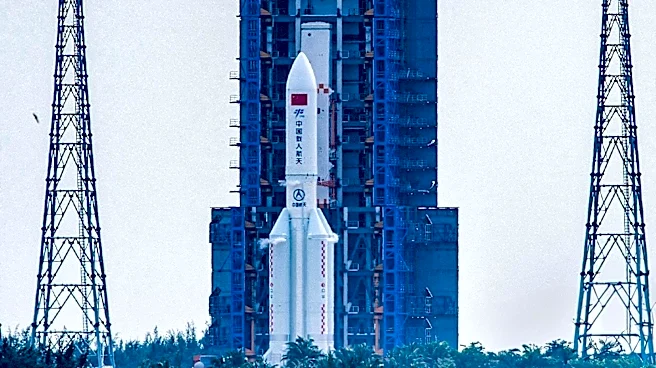
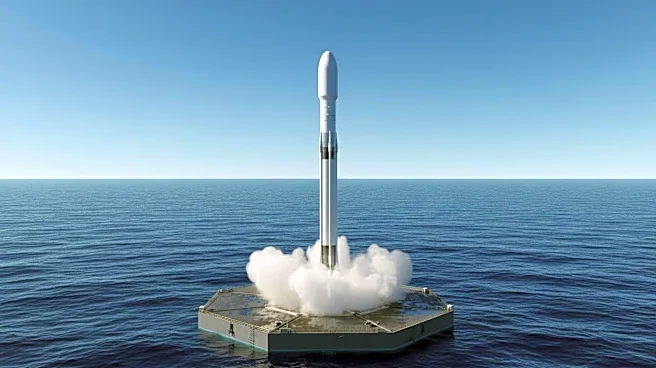
China has successfully recovered the first stage of its Long March-10B rocket using a net-and-cable system at sea, marking a significant achievement in reusable rocket technology. This event took place on July 10, 2026, when the rocket launched from Hainan
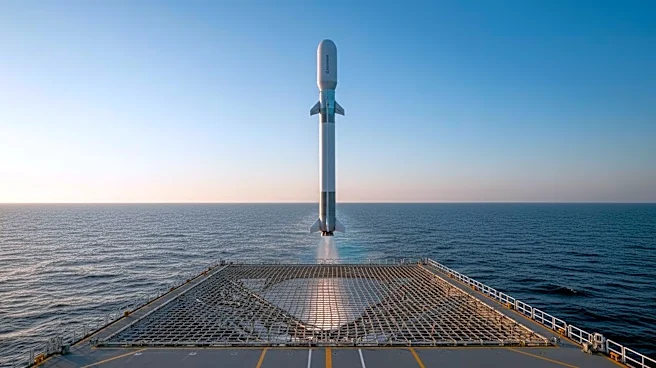
Island, placed a satellite into orbit, and then returned the first stage to a sea-based recovery platform. Unlike SpaceX's Falcon 9, which uses landing legs, the Long March-10B employed a net-like cable system for recovery. This method, described by the China Aerospace Science and Technology Corporation as the world's first network-based recovery of a launch vehicle, aims to reduce the mass of the booster by eliminating heavy landing legs, potentially allowing for more payload capacity.
Why It's Important?
This development is crucial as it represents China's efforts to compete with SpaceX in the reusable rocket sector, which is pivotal for reducing costs and increasing the frequency of satellite launches. The ability to reuse rocket stages can significantly lower the cost of access to space, making it more feasible for countries to deploy satellites and conduct space missions. China's achievement could enhance its position in the global space race, particularly as it plans to use similar technology for future crewed lunar missions. However, SpaceX remains the leader in this field, with over 600 successful booster landings, highlighting the challenge China faces in achieving similar operational efficiency.
What's Next?
China plans to re-fly the recovered Long March-10B stage before the end of 2026, which will be a critical test of the reusability of their technology. Success in this endeavor could establish a new standard for China's space program, potentially leading to more frequent and cost-effective launches. The global space industry will be closely watching China's progress, as it could influence the strategies of other countries and private companies in the space sector.