




What's Happening?
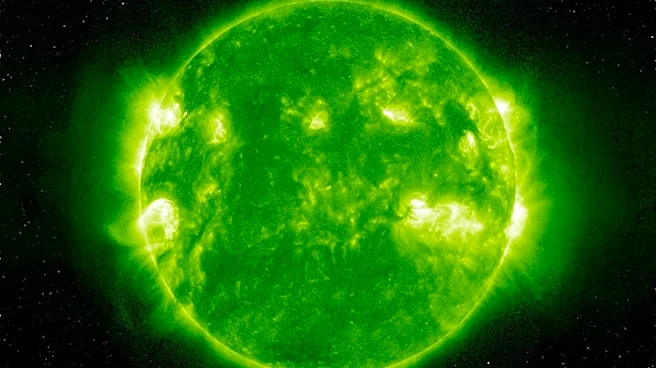
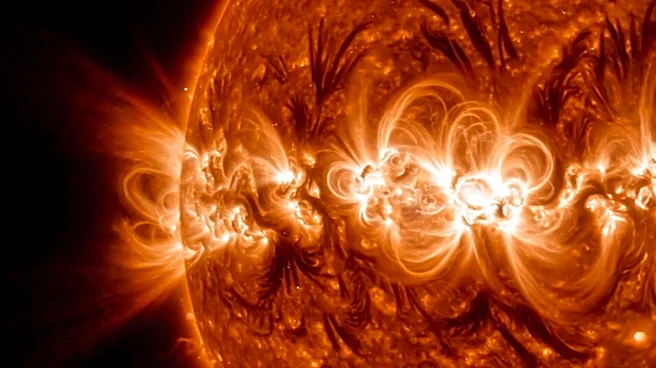
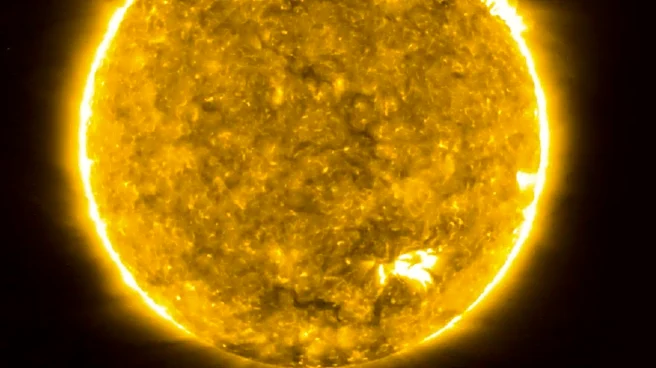
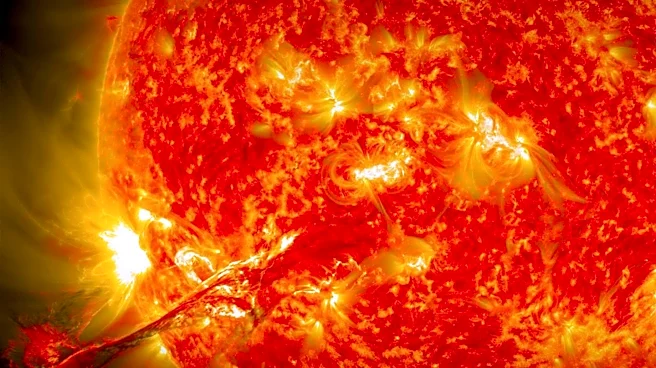
The National Solar Observatory has announced a groundbreaking discovery using the Daniel K. Inouye Solar Telescope in Hawaii. Researchers have observed Kelvin-Helmholtz instability on the sun's surface, characterized by small, swirling patterns. This
discovery was made possible through high-resolution images and computer simulations, providing new insights into solar dynamics. The findings were published in the journal Nature, highlighting the potential of these instabilities to drive solar activity and impact space weather.
Why It's Important?
This discovery is crucial for understanding the fundamental physics of the sun and other stars. The Kelvin-Helmholtz instability could explain how magnetic energy is generated and released, affecting solar activity such as flares and coronal mass ejections. These solar events can disrupt Earth's technological infrastructure, including power grids and communication systems. Understanding these processes is vital for predicting and mitigating the effects of space weather on Earth.
What's Next?
Researchers plan to use advanced computer programs to further analyze these swirling patterns and their impact on solar dynamics. This ongoing research aims to quantify the energy carried by these instabilities and their role in heating the sun's atmosphere. The findings could lead to improved models for predicting solar activity and its effects on Earth.